Choosing the right masonry material is not simply a matter of comparing the price per brick. For builders, contractors, developers and procurement teams, the quality and suitability of the brick can affect wall alignment, mortar consumption, plastering requirements, construction speed, material wastage and the long-term performance of the building.
Fly ash bricks are increasingly used in residential, commercial, industrial and infrastructure construction because they can offer consistent dimensions, controlled manufacturing and useful performance characteristics when they are properly manufactured and selected. But not every batch should be evaluated only by appearance or price.
If you are comparing fly ash bricks in Raipur, Bhilai or other parts of Chhattisgarh, the better approach is to assess the brick against the requirements of the project. This includes understanding the type of fly ash brick, checking applicable Indian Standards, evaluating compressive strength and water absorption, inspecting dimensions and finish, confirming quality documentation, and considering transportation and site handling.
This guide explains what buyers should check before selecting fly ash bricks and how to make a practical purchasing decision without relying on price alone.
What Are Fly Ash Bricks?
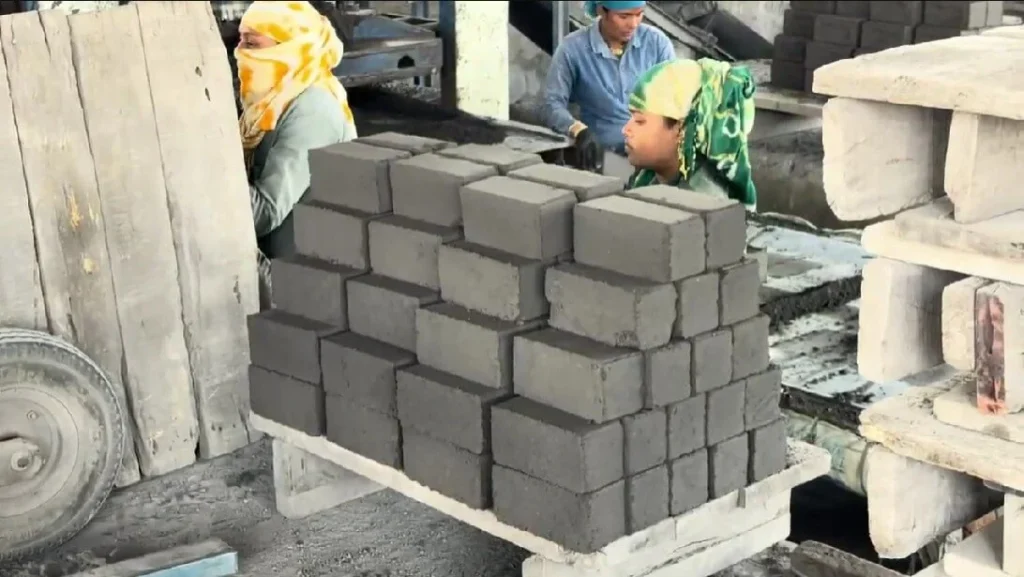
Fly ash bricks are masonry units manufactured using fly ash or pulverised fuel ash along with other specified materials and a controlled manufacturing and curing process.
The term “fly ash brick” is used broadly in the construction market, but technically there are different categories of fly ash-based bricks. For example, the Bureau of Indian Standards identifies pulverised fuel ash-lime bricks under IS 12894:2002 and pulverised fuel ash-cement bricks under IS 16720:2018. Burnt clay fly ash building bricks are covered separately under IS 13757:1993.
This distinction matters because a buyer should not assume that every product marketed as a fly ash brick follows the same formulation or standard.
For procurement purposes, the first question should therefore be:
What type of fly ash brick is being supplied, and which applicable specification is being followed?
The answer should be clear before comparing suppliers or quotations.
Why the Selection of Fly Ash Bricks Matters
Fly ash bricks can provide several practical advantages when manufactured and handled correctly. Their uniformity can make masonry work easier, while appropriate strength and water absorption characteristics can support the performance requirements of a building.
However, these advantages depend on product quality.
A contractor purchasing an inconsistent batch may experience problems such as:
- Uneven wall alignment
- Higher breakage during handling
- Greater material wastage
- Difficulty maintaining masonry dimensions
- Inconsistent mortar joints
- Additional plaster correction work
- Delays caused by replacement of damaged material
- Unpredictable performance between batches
This is why the purchasing decision should focus on fitness for purpose, rather than simply asking which supplier offers the lowest rate.
A slightly lower material price does not necessarily mean a lower total construction cost if poor-quality bricks increase wastage, labour requirements or finishing work.
Understanding the Different Types of Fly Ash-Based Bricks
Before selecting a product, buyers should understand that fly ash-based bricks are not a single technically identical product category.
Fly Ash-Lime Bricks
Pulverised fuel ash-lime bricks are covered under IS 12894:2002. The standard addresses requirements including classification, general quality, dimensions and physical requirements.
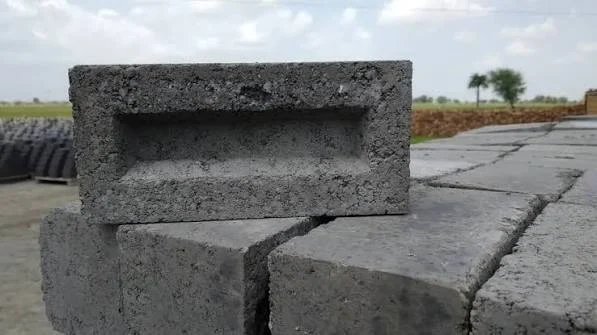
BIS describes these bricks as products made using pulverised fuel ash in major quantity along with lime and additives such as gypsum. The raw materials are blended or interground, moulded and subjected to curing cycles.
For procurement, the important point is to verify that the product being offered actually corresponds to the relevant specification and intended application.
Fly Ash-Cement Bricks
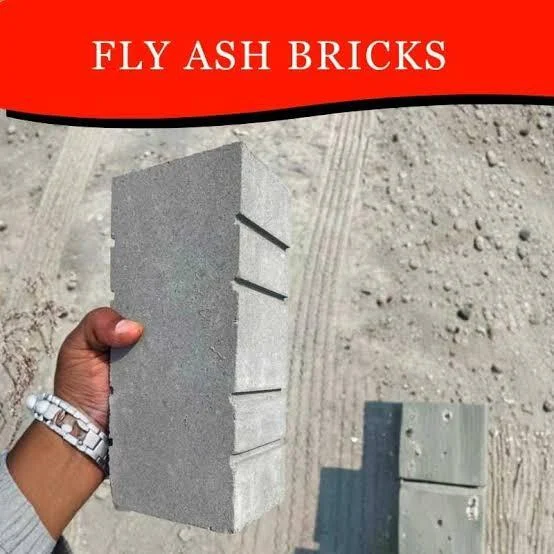
Pulverised fuel ash-cement bricks are covered under IS 16720:2018.
BIS describes these as bricks manufactured using cement, pulverised fuel ash, aggregate and water, with chemical admixtures potentially used where required. The standard also addresses strength classes and other requirements.
For buyers, this means that the manufacturing formulation and quality-control process matter considerably.
Burnt Clay Fly Ash Bricks
Burnt clay fly ash building bricks are covered separately under IS 13757:1993.
These should not automatically be treated as identical to non-fired fly ash-cement or fly ash-lime bricks. The manufacturing process and applicable requirements are different.
Why This Classification Matters
When requesting quotations, avoid asking only for “fly ash bricks.”
Instead, ask the supplier to identify:
- The type of brick
- Applicable Indian Standard
- Strength classification, where applicable
- Dimensions
- Water absorption requirements
- Testing or quality documentation
- Intended application
This creates a much clearer basis for comparison between suppliers.
10 Important Factors to Check Before Buying Fly Ash Bricks
1. Check the Applicable Indian Standard
One of the first checks should be whether the supplier can identify the applicable Indian Standard for the product.
BIS currently lists IS 12894:2002 for pulverised fuel ash-lime bricks and IS 16720:2018 for pulverised fuel ash-cement bricks. BIS testing information also shows that relevant tests can include dimensions, compressive strength, water absorption, efflorescence and, for applicable products, drying shrinkage.
A buyer should therefore avoid accepting vague statements such as “standard quality” without asking which standard is being followed.
A clear specification gives the procurement team a measurable reference point.
2. Check Compressive Strength
Compressive strength is one of the most important technical characteristics of masonry units.
It indicates how much compressive load a brick can withstand under the specified test conditions. The required strength depends on the product specification and intended application.
A common purchasing mistake is to ask for “strong bricks” without specifying the required class or standard.
For a construction project, the engineer or project consultant should determine the appropriate masonry material based on the structural and non-structural requirements.
When comparing suppliers, ask for relevant test results rather than relying only on visual inspection.
A brick may look dense and well finished but still require verification through testing.
3. Check Water Absorption
Water absorption is another important quality parameter.
A masonry unit that absorbs excessive water can influence the behaviour of mortar and masonry and may create practical issues during construction or service if the material does not meet the relevant requirements.
BIS testing facilities for IS 12894 include water absorption testing, demonstrating that this is an established quality parameter for the product.
When evaluating fly ash bricks, buyers should therefore ask:
- What is the applicable water absorption requirement?
- Has the batch been tested?
- Is the test result available?
- Does the product meet the relevant specification?
The answer should be based on documented testing rather than assumptions.
4. Check Dimensions and Dimensional Consistency
Uniform dimensions are one of the practical reasons builders consider manufactured masonry units.
Consistent brick dimensions can help masons maintain more regular courses and joints. They can also make it easier to control wall alignment and reduce unnecessary correction work.
However, “uniform size” should not simply mean that two bricks look similar.
Procurement teams should consider:
- Nominal dimensions
- Permitted tolerances
- Consistency between batches
- Edge condition
- Squareness
- Surface finish
If a shipment contains significant variation, the apparent advantage of standardised manufacturing can be lost during construction.
5. Inspect Edges, Corners and Surface Finish
A good visual inspection should be carried out before accepting a large quantity.
Look for:
- Broken corners
- Cracks
- Excessive surface defects
- Major dimensional variation
- Irregular edges
- Poor compaction
- Visible manufacturing inconsistencies
- Excessive damage during transportation
A few damaged units in a shipment may be unavoidable, but a consistently high level of breakage should trigger further investigation.
The inspection should be carried out on representative samples rather than selecting only the best-looking bricks from the top of a stack.
6. Ask About Testing and Quality Documentation
For larger projects, quality documentation can be more valuable than verbal assurances.
Depending on the project requirements, buyers may request relevant test reports covering parameters such as:
- Compressive strength
- Water absorption
- Dimensions and tolerances
- Efflorescence
- Drying shrinkage, where applicable
The exact testing requirements should follow the applicable standard and project specification.
If a supplier cannot clearly explain what standard their bricks follow or what quality checks are performed, procurement teams should investigate further before placing a large order.
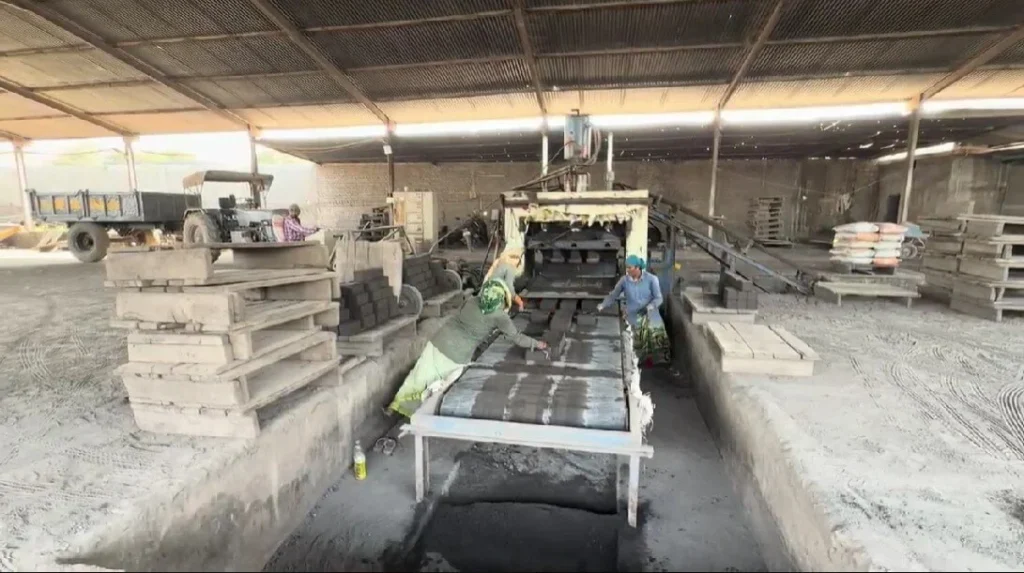
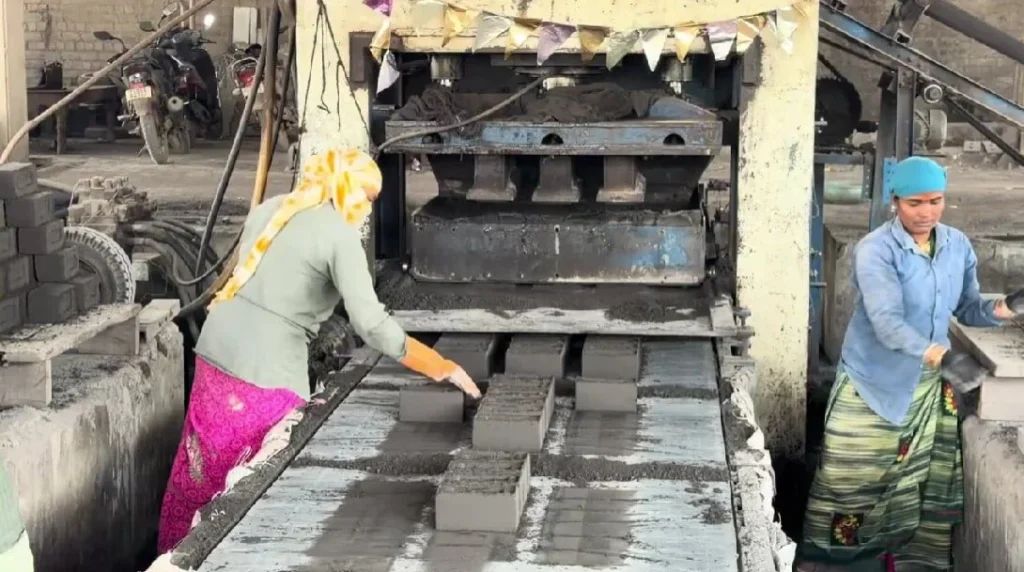
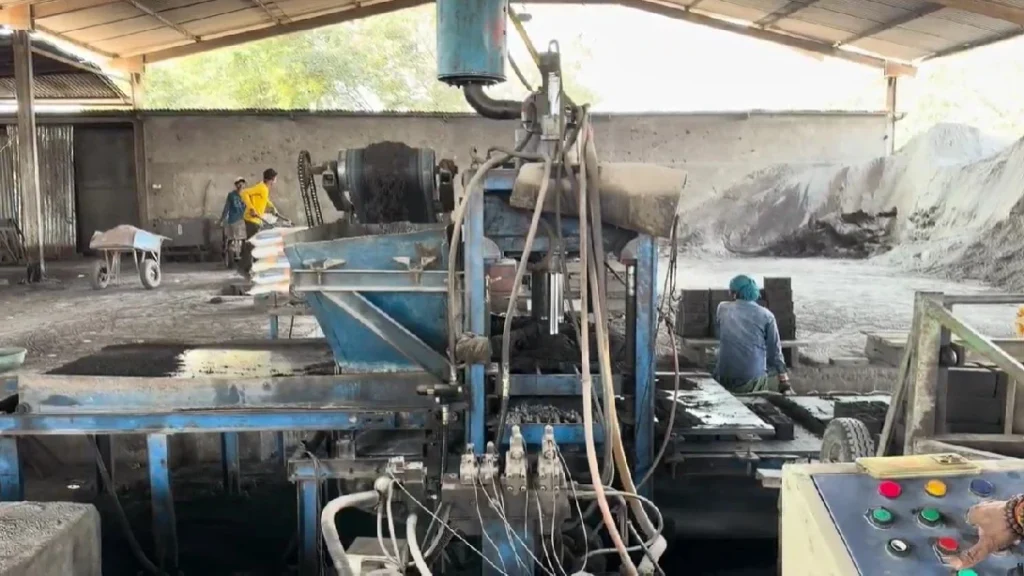
7. Evaluate the Manufacturing and Curing Process
The quality of masonry units is influenced by raw materials, proportioning, mixing, moulding, compaction and curing.
Two suppliers can sell products with similar appearance while delivering different levels of consistency.
This is why purchasing teams should consider the supplier’s quality-control process rather than judging only the finished appearance.
Questions worth asking include:
- How is the raw material controlled?
- How is the mix proportion controlled?
- How is moulding or compaction carried out?
- How is curing managed?
- Are batches tested?
- How are rejected bricks handled?
- How is consistency maintained between batches?
A supplier that can answer these questions clearly provides more confidence than one that relies only on a low quoted price.
8. Consider the Application of the Bricks
Not every construction project has exactly the same masonry requirements.
The appropriate product can depend on whether the bricks are intended for:
- Residential walls
- Commercial buildings
- Industrial structures
- Warehouses
- Boundary walls
- Internal partitions
- External walls
- Infrastructure-related construction
The engineer’s specification should remain the primary reference for technical suitability.
A procurement team should not independently substitute one masonry product for another simply because the alternative is cheaper or more readily available.
Where the project drawings and specifications identify a particular masonry unit or performance requirement, that requirement should be followed.
9. Evaluate Supply Consistency
For a small residential project, the quantity required may be relatively manageable. For a commercial, industrial or infrastructure project, material continuity becomes much more important.
A supplier should be able to communicate clearly about:
- Expected supply schedule
- Batch consistency
- Order quantities
- Loading arrangements
- Delivery coordination
- Replacement of damaged material
- Communication during dispatch
A project can experience delays even when the individual brick is technically acceptable if the material does not arrive according to the construction programme.
Therefore, supplier reliability is part of material selection.
10. Consider Transportation and Handling
Fly ash bricks are manufactured construction materials, but they still require proper handling.
During transportation and unloading, excessive impact can result in chipped corners or broken units.
Before ordering from a supplier in Raipur, Bhilai or another location, consider the complete supply chain rather than only the quoted material rate.
The landed cost can be influenced by:
- Material price
- Transportation
- Loading
- Unloading
- Handling
- Breakage
- Site access
- Delivery scheduling
For larger projects, these factors should be considered during procurement planning.
Fly Ash Bricks in Raipur: What Local Buyers Should Consider
Raipur is an important commercial and industrial centre in Chhattisgarh, and construction procurement in the region can involve residential, commercial, industrial and infrastructure requirements.
For buyers looking for fly ash bricks in Raipur, the most useful approach is not to choose a supplier solely because the supplier is geographically close.
Instead, compare suppliers using a consistent checklist.
A practical comparison can include:
| Evaluation factor | What the buyer should check |
| Product type | Identify whether the brick is fly ash-lime, fly ash-cement or another specified type |
| Standard | Confirm the applicable Indian Standard |
| Strength | Check the required class and test results |
| Water absorption | Verify against the relevant specification |
| Dimensions | Check nominal size and consistency |
| Finish | Inspect representative samples |
| Breakage | Check damaged units during delivery |
| Testing | Request relevant quality documentation |
| Supply | Confirm availability and delivery schedule |
| Commercial terms | Compare total landed cost rather than only unit price |
| Project suitability | Confirm with the project engineer/specification |
This method is especially useful when comparing multiple quotations.
How to Compare Two Fly Ash Brick Suppliers
Suppose two suppliers provide similar quotations.
Supplier A offers a lower per-brick rate but provides limited information about testing.
Supplier B quotes slightly more but clearly identifies the product type, applicable standard, dimensions and test documentation and provides a structured delivery schedule.
The correct decision should not automatically be Supplier A.
Instead, the procurement team should compare the total value of the supply.
A useful supplier comparison can include five stages:
Stage 1: Confirm Technical Compliance
Check whether both products satisfy the project’s specification.
If one does not, the price comparison is irrelevant.
Stage 2: Compare Quality Evidence
Review available test reports, product information and sample quality.
Stage 3: Compare Consistency
Inspect representative samples and, where appropriate, multiple batches.
Stage 4: Compare Supply Reliability
Determine whether the supplier can support the project’s planned consumption.
Stage 5: Compare Total Cost
Consider transportation, handling, breakage and potential finishing implications rather than looking only at the quoted price.
Why the Cheapest Fly Ash Brick May Not Be the Cheapest Option
Construction procurement often focuses heavily on the unit rate.
This is understandable because material quantities can be large. However, masonry materials should be evaluated on total project impact.
Consider a simplified procurement scenario.
If a low-priced brick has inconsistent dimensions and a higher breakage rate, the project may incur additional material wastage and labour. If the masonry requires more correction or finishing, the original price advantage may reduce further.
Conversely, a consistently manufactured product may support better site productivity.
This does not mean that the highest-priced product is automatically the best product.
It means the comparison should be based on technical suitability + consistency + logistics + total cost.
Fly Ash Bricks vs Traditional Clay Bricks: What Should Buyers Compare?
The comparison between fly ash bricks and conventional clay bricks should be based on the specific product and project requirements.
Instead of asking which material is universally better, compare the characteristics that matter for your application.
Dimensional Consistency
Manufactured fly ash bricks can offer consistent dimensions when produced under controlled conditions.
For masonry work, this can make course alignment and joint control easier.
Manufacturing Process
Traditional burnt clay bricks are produced through processes involving clay preparation and firing.
Fly ash-based bricks use industrial by-products in their formulations and can be manufactured through controlled moulding and curing processes depending on the brick type.
Resource Utilisation
BIS notes that fly ash-based bricks support the utilisation of industrial fly ash and resource optimisation.
This is one reason they are associated with more resource-efficient construction practices.
Quality Control
Both material categories should be evaluated against their relevant specifications.
The important procurement question is not simply “fly ash or clay?”
It is:
Does the selected product meet the technical requirements of the project and can the supplier maintain consistent quality?
Are Fly Ash Bricks Suitable for Residential Construction?
Fly ash bricks can be used in residential construction when the selected product is suitable for the intended application and meets the project’s technical requirements.
For homeowners and residential contractors, important checks include:
- Brick quality
- Dimensions
- Strength
- Water absorption
- Surface condition
- Availability
- Masonry specification
- Supplier reliability
For a small residential project, buyers may be tempted to choose based on the lowest local rate.
A better approach is to inspect a sample before purchasing the complete quantity.
If the sample is acceptable, the next step should be confirming that the delivered material will maintain similar quality.
Are Fly Ash Bricks Suitable for Commercial and Industrial Projects?
They can be used in commercial and industrial construction, subject to the project’s specifications and the suitability of the selected product.
For larger projects, procurement requirements are generally more structured.
A commercial or industrial project may need:
- Documented material specifications
- Defined quality parameters
- Batch-level checks
- Planned delivery
- Material inspection
- Quantity reconciliation
- Coordination with the construction schedule
This makes supplier quality-control processes particularly important.
For large projects, the procurement team should coordinate with the project engineer, consultant and site team before finalising the product.
What Should You Ask a Fly Ash Brick Supplier Before Ordering?
Before placing an order, ask the supplier these practical questions:
- What type of fly ash brick do you supply?
- Which Indian Standard applies to the product?
- What strength class is being supplied?
- What are the nominal dimensions?
- What quality tests are performed?
- Can relevant test reports be provided?
- How is water absorption checked?
- How is dimensional consistency maintained?
- What is the expected breakage level during transportation?
- What is the delivery schedule?
- How are damaged or rejected bricks handled?
- Can a representative sample be inspected before a bulk order?
- Can the same specification be maintained across future batches?
- What information will be provided with the material?
- Does the product meet the project specification?
These questions can significantly improve procurement decisions.
Common Mistakes When Buying Fly Ash Bricks
Mistake 1: Choosing Only by Price
Price is important, but it should not be the only selection criterion.
A technically unsuitable product can create additional costs later.
Mistake 2: Assuming All Fly Ash Bricks Are the Same
Different fly ash-based brick categories have different formulations and applicable standards.
Always identify the product type.
Mistake 3: Ignoring Test Documentation
Visual inspection is useful but cannot replace relevant testing.
For important projects, documented test results provide stronger evidence of compliance.
Mistake 4: Ordering Without Checking Samples
A sample inspection can reveal dimensional variation, surface defects and handling issues before a large quantity is purchased.
Mistake 5: Ignoring Transportation Breakage
A supplier may offer good bricks at the manufacturing location, but poor handling can damage them before they reach the site.
Mistake 6: Buying More Than the Site Can Store Properly
Material planning should consider site space, handling arrangements and the construction schedule.
Large quantities should not be delivered simply because the material is available if the site cannot manage it effectively.
Mistake 7: Changing the Specified Material Without Approval
If a consultant, engineer or project specification identifies a particular masonry product, do not substitute another material without appropriate technical review.
How to Plan Fly Ash Brick Procurement for a Construction Project
A simple procurement workflow can reduce avoidable problems.
Step 1: Understand the Project Requirement
Determine the type of masonry work, required dimensions and relevant project specification.
Step 2: Identify the Applicable Product Standard
Confirm which standard applies to the product being considered.
Step 3: Shortlist Suppliers
Compare suppliers based on technical suitability, quality evidence, supply reliability and commercial terms.
Step 4: Inspect Samples
Inspect representative bricks for dimensions, edges, finish and visible defects.
Step 5: Review Test Information
Where required, obtain relevant test documentation for parameters such as compressive strength, water absorption and other applicable characteristics.
Step 6: Compare Total Cost
Consider material, transportation, handling and expected wastage.
Step 7: Plan Delivery
Coordinate delivery with site requirements and the construction schedule.
Step 8: Inspect Incoming Material
Do not assume that an approved sample guarantees every shipment. Inspect delivered material and maintain basic quality records.
Quality Checks at the Construction Site
Quality control should continue after the material reaches the site.
The site team can establish a simple inspection procedure.
Visual Inspection
Check for:
- Cracks
- Broken corners
- Major dimensional differences
- Damaged surfaces
- Unusual variation between batches
Dimensional Checks
Measure representative units rather than relying only on visual judgement.
Documentation Check
Match the delivered product with the approved specification and available quality documents.
Storage Check
Keep materials organised and protect them from unnecessary damage during handling and storage.
Batch Identification
For larger projects, maintaining records of supplier, delivery date and batch information can make quality tracking easier.
Storage and Handling of Fly Ash Bricks
Proper handling can help reduce avoidable breakage.
Bricks should be stacked in an organised manner where possible, with access maintained for inspection and movement.
The site team should avoid unnecessary throwing or dropping of masonry units.
Material should also be coordinated with the actual construction programme.
If bricks arrive substantially earlier than required, they may occupy valuable site space and require additional handling. If they arrive too late, masonry work may stop.
The objective is therefore not simply to maximise stock but to maintain an appropriate flow of material to the work front.
How Fly Ash Bricks Can Support Construction Efficiency
One reason builders consider manufactured fly ash bricks is their dimensional consistency.
When the bricks are consistent, masons can spend less time correcting individual units and can maintain more regular masonry courses.
Potential project-level benefits may include:
- Better wall alignment
- More consistent joints
- Reduced cutting or adjustment
- Lower wastage
- More predictable material consumption
- Improved masonry productivity
However, these outcomes depend on the actual quality of the supplied product and the workmanship at site.
The material itself cannot compensate for poor construction practices.
Fly Ash Bricks and Sustainable Construction
Fly ash utilisation is also relevant from a resource-efficiency perspective.
BIS identifies fly ash-based products as construction materials that promote utilisation of fly ash and resource optimisation.
Fly ash bricks can therefore form part of a broader sustainable construction strategy.
Their environmental value should nevertheless be discussed accurately.
A brick should not be labelled “green” simply because it contains fly ash. The overall environmental impact depends on factors such as raw materials, manufacturing process, energy consumption, transportation, durability and project context.
For responsible procurement, sustainability should be considered alongside technical performance.
How Fly Ash Bricks Can Benefit Projects in Chhattisgarh
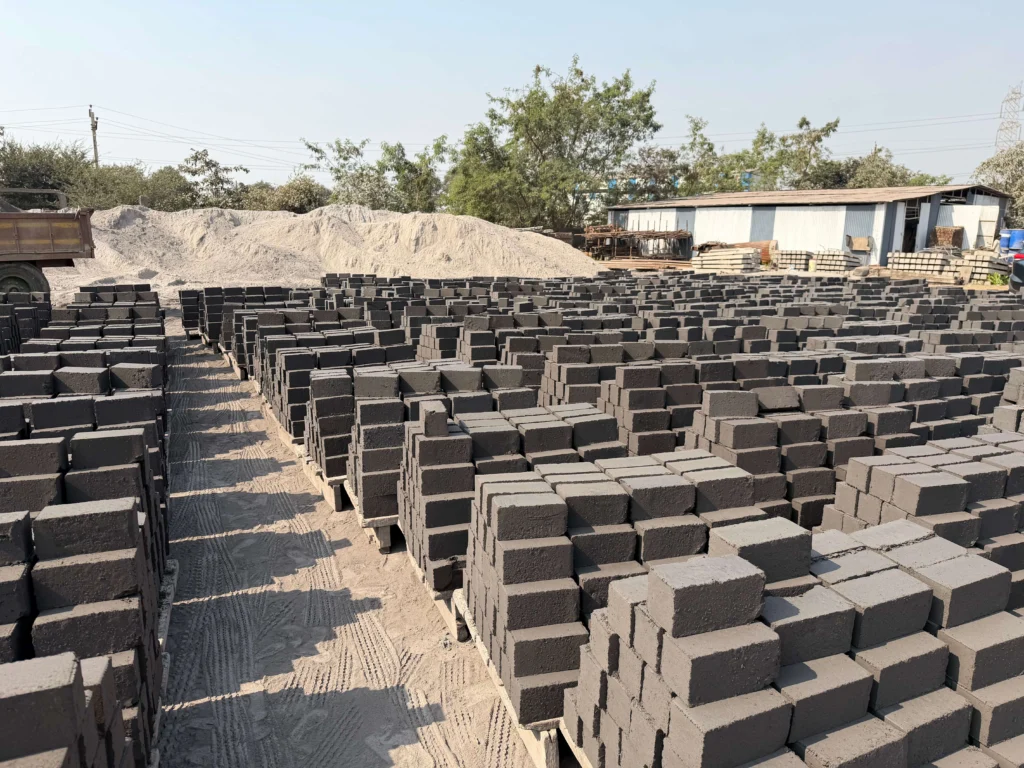
For construction projects around Raipur and Bhilai, local availability can make fly ash-based masonry materials a practical option to evaluate.
Chhattisgarh has significant industrial and power-related activity, and fly ash utilisation is relevant to the region’s construction-material ecosystem.
However, local availability should not replace technical selection.
A buyer should still confirm:
- Product classification
- Applicable standard
- Quality parameters
- Test documentation
- Supply consistency
- Delivery arrangements
- Project suitability
For procurement teams, the combination of local supply access and proper quality control can make material planning more predictable.
Choosing a Fly Ash Brick Supplier in Raipur or Bhilai
When selecting a supplier, consider the supplier as part of the project’s material-management system.
The best evaluation is not based on one factor.
Consider:
Product Quality
Does the material meet the required specification?
Consistency
Can the supplier maintain comparable quality across deliveries?
Documentation
Can the supplier provide appropriate product and test information?
Supply Reliability
Can the supplier coordinate deliveries with the construction programme?
Communication
Does the supplier respond clearly to technical and commercial questions?
Logistics
Can the material reach the project site in a condition suitable for construction?
Commercial Terms
Are the total costs, payment terms and delivery conditions clear?
These criteria can be used to compare suppliers objectively instead of relying on informal recommendations alone.
Why Local Procurement Does Not Mean Compromising on Quality
Builders sometimes assume that sourcing locally means accepting whatever material is readily available.
That approach can create unnecessary risk.
A local supplier can still be evaluated using the same technical checklist used for a larger supplier.
For projects in Raipur, Bhilai, Durg or surrounding areas, procurement teams should ask for samples, confirm specifications and evaluate delivery capability before finalising a bulk purchase.
Local sourcing can reduce logistical complexity, but the product still needs to meet the project’s requirements.
Rock Ventures and Fly Ash Bricks
Rock Ventures provides fly ash bricks for residential, commercial and industrial construction and presents the product as a sustainable building-material option.
The company’s fly ash brick service page highlights characteristics including strength, durability, uniform shape and finish, thermal insulation and sustainable composition.
For a project considering fly ash bricks, the relevant next step is to discuss the required application and material requirements rather than selecting a product solely on a generic “best brick” claim.
Rock Ventures’ fly ash brick service can be considered as part of the supplier evaluation process, particularly for projects requiring fly ash bricks in the Bhilai and Raipur market.
A Practical Fly Ash Brick Buying Checklist
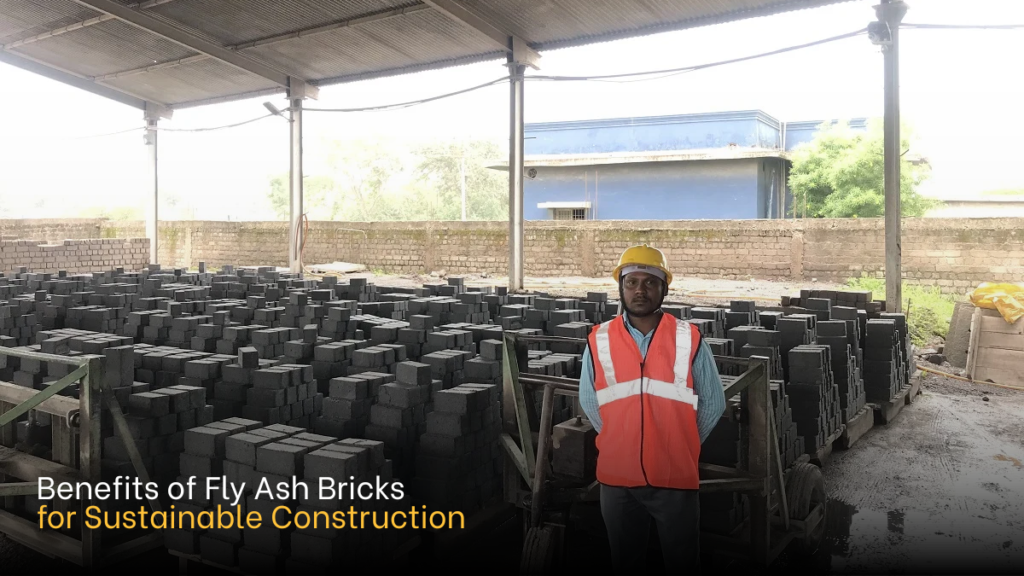
Before confirming your order, use the following checklist:
Product
- Product type identified
- Intended application confirmed
- Applicable Indian Standard identified
- Required dimensions confirmed
- Required strength class confirmed
Quality
- Representative samples inspected
- Dimensions checked
- Surface finish checked
- Cracks and damaged edges checked
- Relevant test reports reviewed
- Water absorption requirements checked
- Compressive strength information reviewed
Supply
- Required quantity estimated
- Delivery schedule confirmed
- Site access checked
- Loading and unloading arrangements confirmed
- Breakage/replacement process discussed
Commercial
- Material price confirmed
- Transportation cost understood
- Additional charges clarified
- Payment terms documented
- Total landed cost compared with alternatives
Site
- Storage area available
- Handling process planned
- Incoming material inspection assigned
- Material delivery coordinated with masonry work
This checklist is simple, but it can prevent many avoidable procurement problems.
Frequently Asked Questions
Q1. What are the main advantages of fly ash bricks?
Fly ash bricks can offer useful characteristics such as dimensional consistency, strength and resource-efficiency benefits when they are manufactured according to the applicable specification. Their practical advantages depend on the particular brick type, manufacturing quality and intended application. Buyers should therefore evaluate technical parameters such as strength, water absorption and dimensions instead of assuming that every fly ash brick has identical performance.
Q2. How do I choose good quality fly ash bricks?
Start by identifying the type of fly ash brick and the applicable Indian Standard. Then check representative samples for dimensions, surface condition, cracks and damaged edges. For larger or technically important projects, review relevant test information covering parameters such as compressive strength and water absorption. Supplier consistency and delivery reliability should also be considered because a technically suitable product is useful only when the required quality can be maintained throughout the project.
Q3. What should I check when buying fly ash bricks in Raipur?
When buying fly ash bricks in Raipur, compare suppliers using a technical and commercial checklist. Confirm the product type, applicable standard, dimensions, strength requirements, water absorption requirements and available test documentation. Also evaluate transportation, delivery schedules, breakage and total landed cost. A local supplier should still be assessed on quality and consistency rather than being selected only because the material is nearby.
Q4. Are fly ash bricks suitable for residential construction?
Fly ash bricks can be suitable for residential construction when the selected product meets the project’s technical requirements and is appropriate for the intended masonry application. The decision should consider strength, dimensions, water absorption, workmanship and the project’s specifications. For a residential project, inspecting a representative sample before purchasing the full quantity is a practical way to identify obvious quality or dimensional issues.
Q5. Are fly ash bricks better than clay bricks?
There is no single answer that applies to every project. Fly ash-based bricks and conventional clay bricks have different manufacturing processes and product characteristics. The appropriate choice depends on the project specification, required performance, availability, workmanship and procurement considerations. Instead of selecting a material solely because it is described as better, compare the actual products against the technical requirements of the project.
Q6. Which Indian Standards are relevant to fly ash bricks?
Different fly ash-based brick products are covered by different Indian Standards. BIS identifies IS 12894:2002 for pulverised fuel ash-lime bricks, IS 16720:2018 for pulverised fuel ash-cement bricks and IS 13757:1993 for burnt clay fly ash building bricks. The applicable standard should therefore be confirmed based on the actual product being purchased.
Q7. Should I ask for a test report before buying fly ash bricks?
For larger, commercial or technically controlled projects, requesting relevant test information is a sensible procurement practice. Depending on the applicable product standard, testing may cover parameters such as dimensions, compressive strength, water absorption, efflorescence and drying shrinkage. The project specification should determine which tests are required. Test documentation provides stronger evidence than relying solely on visual inspection or a supplier’s verbal assurance.
Q8. How can I compare fly ash brick suppliers?
Compare suppliers across five areas: technical compliance, product quality, consistency, logistics and total commercial cost. First confirm that the product meets the project requirement. Then inspect samples and review available test information. Finally, compare delivery reliability, transportation, breakage and total landed cost. This gives a more realistic comparison than selecting the supplier with the lowest quoted price per brick.
Conclusion
The advantages of using fly ash bricks become meaningful only when the selected product is technically suitable and consistently manufactured.
For builders, contractors and procurement teams, the purchasing decision should therefore go beyond the question of price. Identify the type of brick, confirm the applicable Indian Standard, check dimensions, review compressive strength and water absorption requirements, inspect samples, evaluate testing information and consider the supplier’s ability to maintain consistent quality.
For projects in Raipur, Bhilai and surrounding areas, local availability can simplify procurement, but technical evaluation should remain the foundation of the buying decision.
Rock Ventures’ fly ash brick service can be considered when evaluating supply options for construction requirements in the region. Before placing a bulk order, discuss the project application, required specifications and delivery requirements with the supplier.
If you are planning a construction project and need to evaluate fly ash bricks or other construction-material requirements, Contact Rock Ventures to discuss your project requirements.