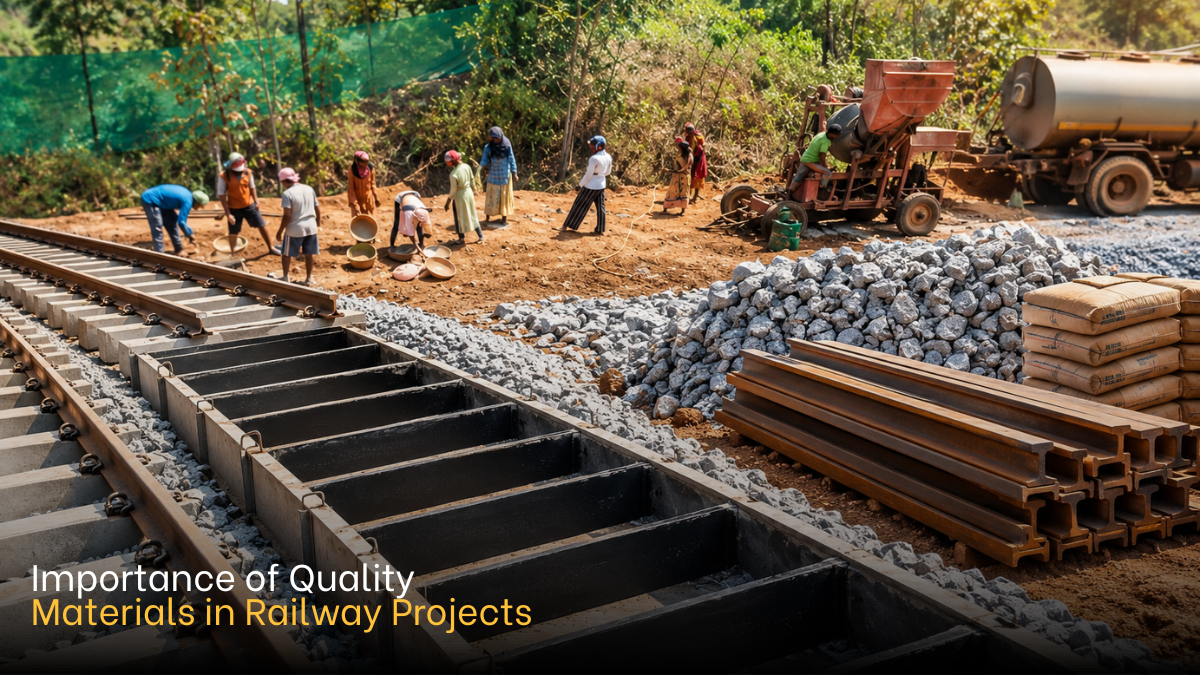
Railway infrastructure is one of the most critical components of a country’s transportation network in Importance of Quality Materials in Railway Projects From freight movement and passenger travel to industrial connectivity and economic development, a well-built railway system depends on the quality of materials used during construction.
Every component—from the track foundation to bridges, platforms, culverts, and concrete structures—must be designed to withstand heavy loads, changing weather conditions, and continuous usage for decades. Using high-quality construction materials not only improves the strength and durability of railway infrastructure but also enhances safety, reduces maintenance costs, and ensures long-term performance.
At Rock Ventures, we understand the importance of delivering reliable construction materials and infrastructure solutions that meet the demanding standards of railway projects.
Why Material Quality Matters in Railway Construction
Railway projects operate under strict engineering specifications because even minor material deficiencies can lead to structural failures, increased maintenance, or operational disruptions.
High-quality construction materials help achieve:
- Enhanced structural strength
- Longer service life
- Improved passenger and freight safety
- Reduced maintenance requirements
- Better resistance to environmental conditions
- Compliance with engineering standards
Investing in quality materials during construction significantly reduces lifecycle costs and improves the overall reliability of railway infrastructure.
1. Ensures Structural Strength and Stability
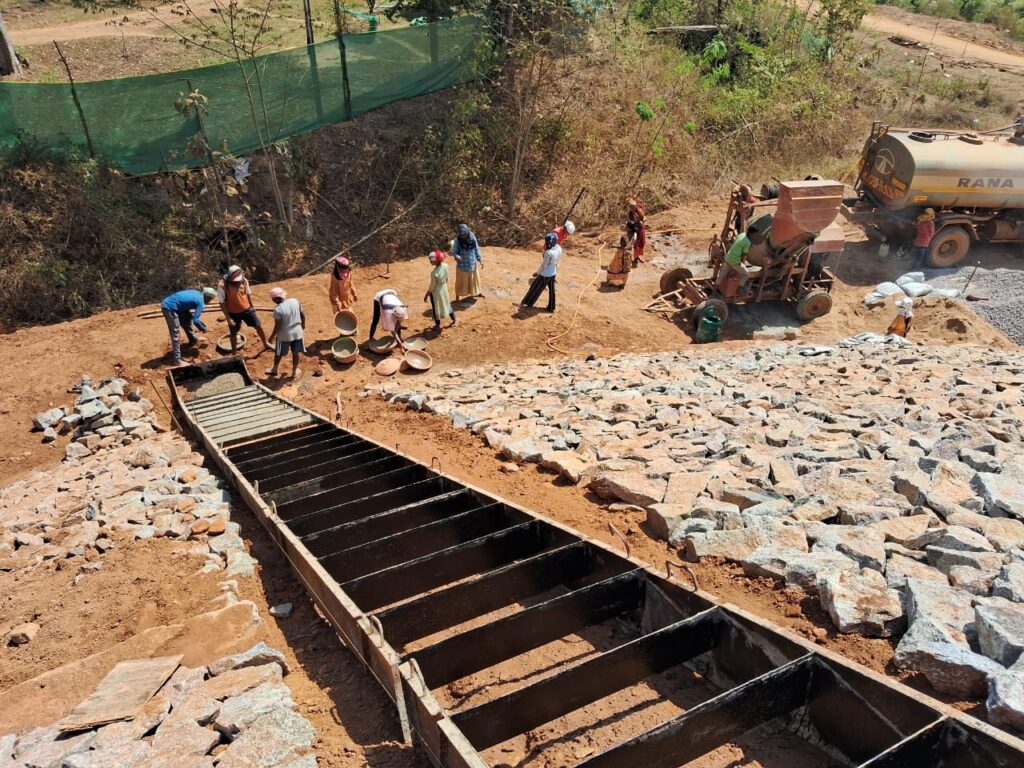
Railway infrastructure supports heavy axle loads, high-speed trains, and continuous traffic throughout the year.
Quality materials such as premium cement, graded aggregates, reinforced steel, and high-performance concrete provide the strength required for:
- Railway bridges
- Platforms
- Retaining walls
- Culverts
- Drainage structures
- Track support systems
Strong foundations ensure long-term structural stability even under demanding operating conditions.
2. Improves Passenger Safety
Safety is the highest priority in every railway project.
Poor-quality construction materials can result in cracks, settlement, corrosion, or premature structural deterioration, increasing safety risks.
Using certified, high-quality materials helps maintain the integrity of railway structures and minimises the likelihood of failures.
3. Increases Durability
Railway structures are constantly exposed to:
- Heavy vibrations
- Dynamic train loads
- Rainfall
- Temperature fluctuations
- Moisture
- Chemical exposure
Durable materials are designed to withstand these conditions without significant deterioration, extending the life of the infrastructure.
4. Reduces Maintenance Costs
Frequent repairs can disrupt railway operations and increase project costs.
High-quality materials reduce:
- Surface damage
- Structural cracks
- Water penetration
- Corrosion
- Premature wear
This leads to fewer maintenance interventions and lower long-term operational expenses.
5. Supports High-Speed and Heavy Freight Operations
Modern railway networks demand stronger infrastructure than ever before.
Quality materials provide:
- Better load-bearing capacity
- Improved dimensional stability
- Reduced deformation
- Enhanced structural reliability
These characteristics are essential for supporting high-speed passenger trains and heavy freight movement safely.
6. Enhances Concrete Performance
Concrete is widely used in railway projects for foundations, bridges, stations, drainage systems, and retaining structures.
Using high-quality concrete offers several advantages:
- Higher compressive strength
- Uniform quality
- Better workability
- Reduced permeability
- Improved durability
- Longer service life
Ready Mix Concrete (RMC) produced under controlled conditions also helps ensure consistent quality across large infrastructure projects.
7. Improves Resistance to Environmental Conditions
Railway infrastructure must perform reliably in a wide range of environmental conditions.
Quality construction materials provide better resistance to:
- Water ingress
- Corrosion
- Freeze-thaw cycles (where applicable)
- Chemical attack
- Abrasion
- UV exposure
This ensures long-lasting performance even in challenging climates.
8. Ensures Compliance with Industry Standards
Railway construction follows stringent technical specifications and quality control requirements.
Using tested and certified materials helps contractors comply with:
- Project specifications
- Engineering quality standards
- Safety requirements
- Inspection protocols
- Performance benchmarks
Compliance also reduces the risk of project delays caused by quality issues.
9. Promotes Sustainable Infrastructure
Modern railway projects increasingly focus on sustainability.
Quality materials contribute by:
- Reducing waste through longer service life
- Lowering maintenance-related resource consumption
- Improving construction efficiency
- Supporting environmentally responsible practices
Durable infrastructure requires fewer repairs and replacements, reducing its overall environmental impact.
10. Delivers Long-Term Value
Although premium materials may involve a higher initial investment, they provide substantial long-term benefits.
These include:
- Lower maintenance costs
- Increased operational reliability
- Improved infrastructure lifespan
- Enhanced safety
- Better return on investment
For railway authorities, contractors, and infrastructure developers, quality materials are a cost-effective choice over the lifecycle of the project.
Key Construction Materials Used in Railway Projects
Successful railway construction relies on a combination of high-performance materials, including:
- Cement
- Ready Mix Concrete (RMC)
- Reinforcement Steel
- Crushed Stone Aggregates
- Sand
- Ballast
- Geotextiles
- Drainage Materials
- Structural Steel
- Precast Concrete Components
Selecting the right materials for each application is essential to achieving the required strength, durability, and performance.
Why Choose Rock Ventures?
At Rock Ventures, we are committed to supplying dependable construction materials and infrastructure solutions that support high-quality railway, commercial, industrial, and civil engineering projects.
Our strengths include:
- Premium-quality construction materials
- Reliable Ready Mix Concrete solutions
- Strict quality control processes
- Timely supply and delivery
- Experienced technical support
- Customer-focused service
- Commitment to safety and sustainability
We work closely with contractors, engineers, and infrastructure developers to help deliver projects that meet the highest standards of quality and performance.
Conclusion
The success of any railway project depends on the quality of the materials used during construction. Strong, durable, and reliable materials improve structural integrity, enhance passenger safety, reduce maintenance costs, and extend the lifespan of railway infrastructure.
As India’s railway network continues to expand and modernise, investing in quality materials is more important than ever. By choosing trusted suppliers like Rock Ventures, project stakeholders can ensure that every railway project is built to perform safely and efficiently for generations to come.