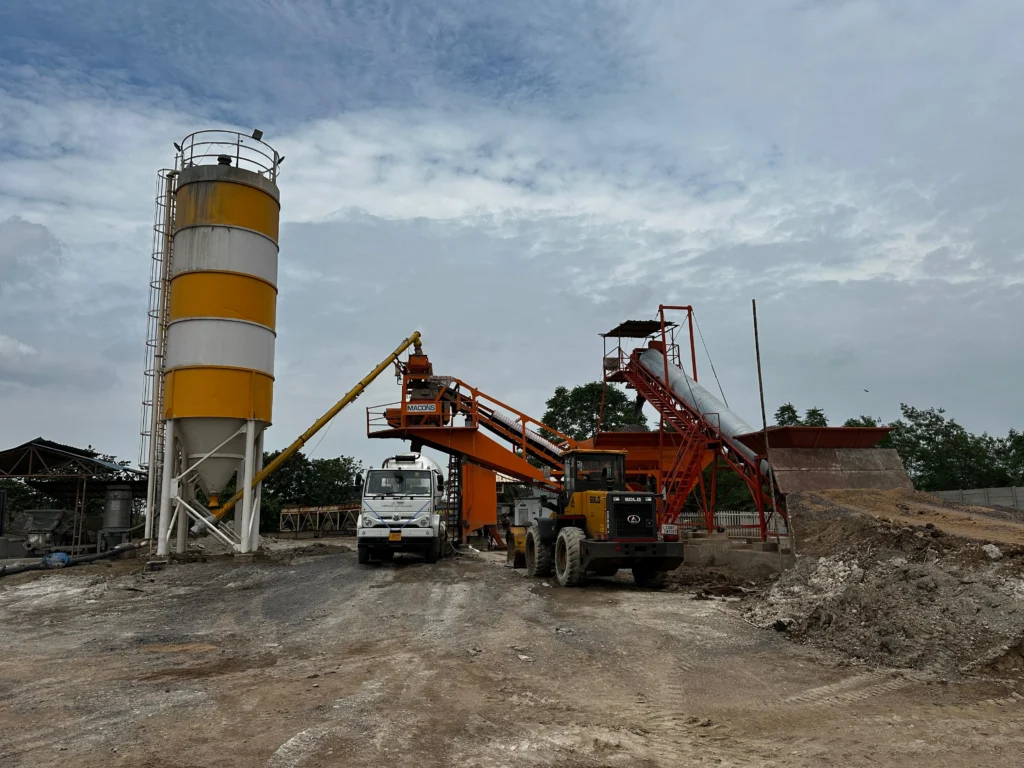
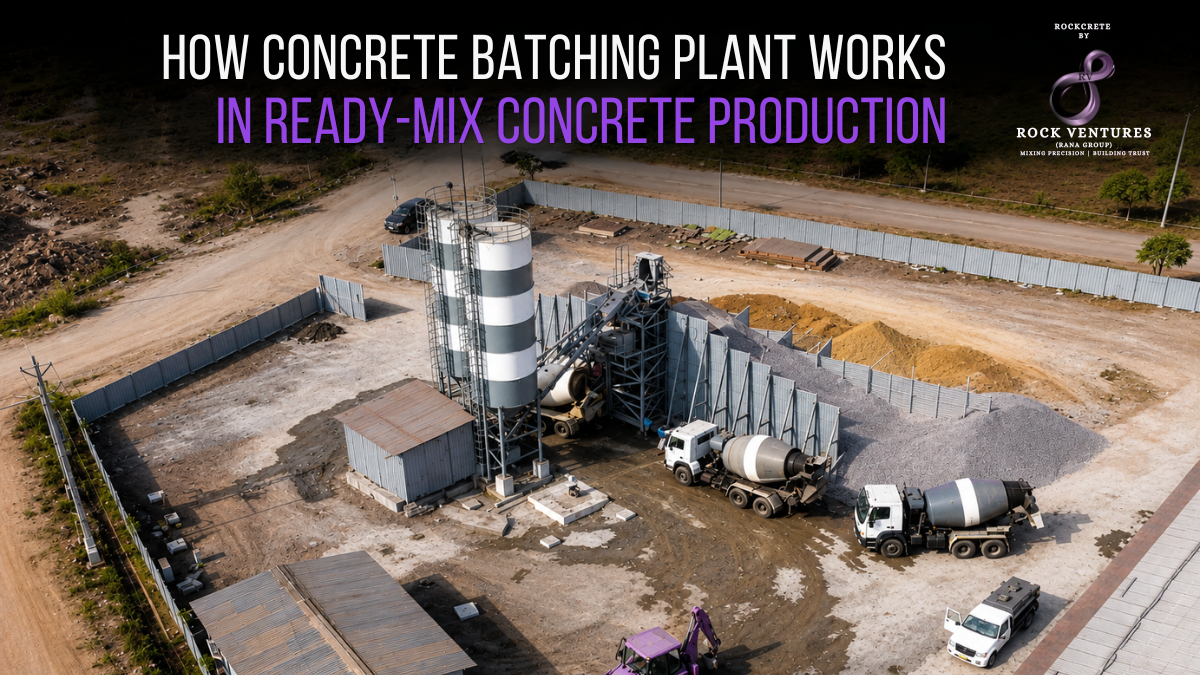
If you have ever driven past a construction site and noticed large rotating drums, towering silos, and conveyor belts working in perfect synchrony, you have witnessed the heart of modern concrete production in action. A concrete batching plant is one of the most critical pieces of equipment in the construction industry, and understanding how it works can help contractors, project managers, and even curious minds make better decisions when it comes to ready-mix concrete production.
At Rock Ventures, a trusted infrastructure company based in Bhilai, Chhattisgarh, ready-mix concrete is produced under the brand name RockCrete RMC using modern batching plant technology — delivering consistent, high-strength concrete for residential, commercial, and infrastructure projects across the region.
In this blog, we will walk you through the complete working process of a concrete batching plant, explore the key components involved, and explain why this technology is the backbone of efficient, high-quality ready-mix concrete supply.
What Is a Concrete Batching Plant?
A concrete batching plant, also known as a concrete mixing plant or ready-mix plant, is a facility where the raw materials needed to produce concrete are combined in precise ratios to create a consistent, high-quality product. These raw materials typically include cement, water, sand (fine aggregates), gravel or crushed stone (coarse aggregates), and various chemical admixtures.
The primary purpose of a concrete batching plant is to produce ready-mix concrete in large volumes while maintaining strict quality control standards. Unlike site-mixed concrete, ready-mix concrete produced at a batching plant is manufactured under controlled conditions, which significantly improves consistency, durability, and strength.
Modern batching plants use computer-controlled batching systems to weigh and measure every ingredient with precision. This level of automation reduces human error and ensures that every batch of concrete meets the required specifications, whether it is for a high-rise building, a highway, a bridge, or a residential development.
Key Components of a Ready-Mix Concrete Batching Plant
Before diving into how the plant works, it is important to understand the major components that make up a typical concrete batching plant. Each component plays a specific role in the production process.
1. Aggregate Storage Bins
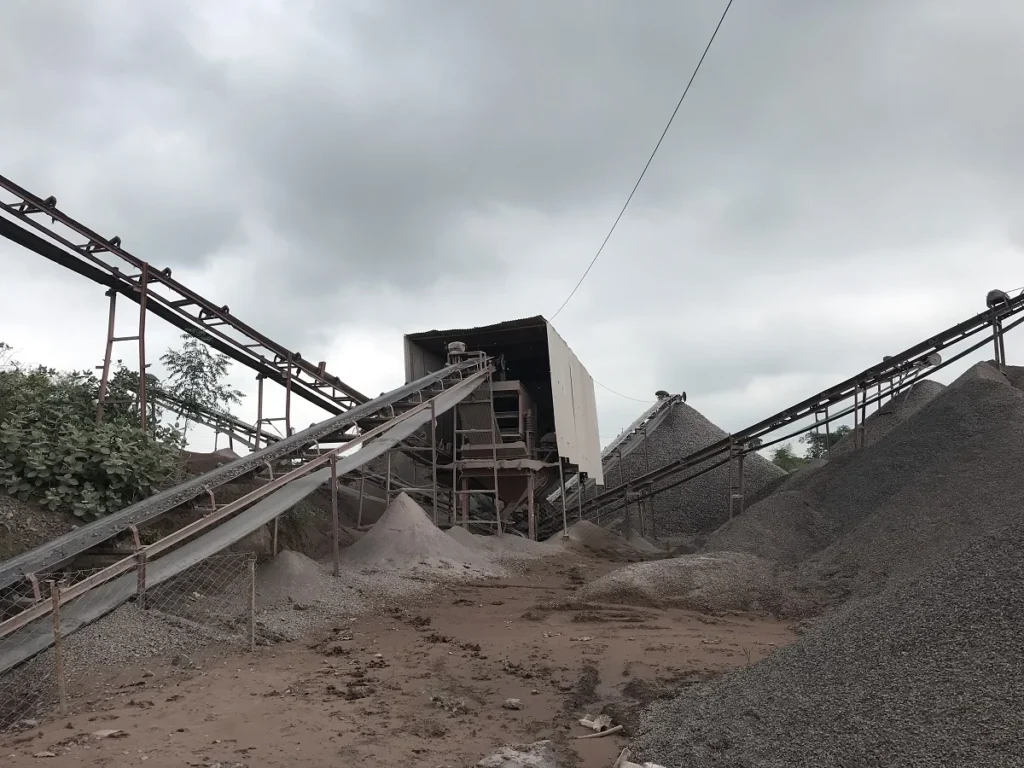
Aggregate storage bins are large compartments designed to hold different types and sizes of aggregates, including fine sand, coarse gravel, and crushed stone. These bins are typically arranged in a row and are loaded using front-end loaders or conveyor belts. Keeping aggregates segregated and dry is essential for maintaining accurate mix designs.
2. Cement Silos
Cement silos are tall, cylindrical storage tanks that store bulk cement in powder form. Bulk cement delivered by tanker trucks is pneumatically transferred into these silos. Modern batching plants often have multiple silos to store different types of cement, such as Ordinary Portland Cement (OPC), Pozzolana Portland Cement (PPC), and fly ash. The sealed design of silos protects cement from moisture, which is critical since even small amounts of humidity can compromise cement quality.
3. Weigh Batchers and Batching System
The weight batcher is the precision measuring system of the plant. It consists of load cells and weighing hoppers that measure each material to the exact specification defined in the mix design. Modern plants use computerized batching control panels that automatically dispense the right quantities of cement, aggregates, water, and admixtures. This automation ensures uniformity across every batch and eliminates the risks associated with manual weighing.
4. Water and Admixture Storage Tanks
Water is stored in overhead tanks or ground-level tanks, and it is dispensed by flow meters or load cell-based systems to maintain accuracy. Admixture tanks store chemical additives such as plasticizers, retarders, accelerators, and air-entraining agents. These admixtures are added in small but precise quantities to enhance specific properties of the concrete, such as workability, setting time, and durability.
5. Concrete Mixer
The mixer is the central piece of equipment where all the ingredients come together and are blended into a homogeneous concrete mix. There are two main types used in batching plants: twin-shaft mixers, which are common in central mix plants and deliver superior mixing efficiency, and drum mixers, which are used in transit mix operations where concrete is mixed inside a rotating drum during transport to the site.
6. Control Panel and Automation System
The control panel is the brain of the batching plant. Modern ready-mix concrete plants are equipped with fully automated control systems that manage every stage of production from ingredient batching to mixing time. Operators can input mix design parameters, monitor production data in real time, and generate quality control reports. Advanced systems even allow remote monitoring and diagnostics, making plant management more efficient.
Step-by-Step Working Process of a Concrete Batching Plant
Now that we understand the components, let us walk through the actual working process of a concrete batching plant during ready-mix concrete production.
Step 1: Raw Material Storage and Handling
The process begins with the delivery and storage of raw materials. Aggregates (sand and gravel) are delivered by trucks and stored in aggregate bins, while bulk cement arrives by tanker and is pneumatically loaded into the silos. Water is supplied through municipal connections or stored in dedicated tanks. Chemical admixtures are also stored in dedicated tanks ready for dispensing.
Proper raw material management is a crucial first step because the quality of input materials directly determines the quality of the finished concrete. Reputable ready-mix concrete plants test their aggregates and cement regularly to ensure compliance with relevant standards.
Step 2: Feeding Aggregates to the Conveyor System
Once an order is received and a mix design is selected via the control system, the batching process begins. Aggregates are discharged from their respective bins onto a radial conveyor belt or inclined conveyor that transports them to the weigh hopper positioned above the mixer. In some plant configurations, individual aggregate bins discharge directly into separate weigh hoppers for more precise batching.
Step 3: Precise Weighing of All Ingredients
This is one of the most critical stages in ready-mix concrete production. The batching control system activates the discharge gates and load cells to weigh each material precisely according to the specified concrete mix design. Cement is extracted from the silo by screw conveyors and weighed in a separate cement weigh hopper. Water and admixtures are measured using flow meters or weight-based systems.
Even a small deviation in the water-to-cement ratio can significantly affect the strength and durability of the final product. This is why modern batching plants use digital load cells with high accuracy, ensuring that every batch meets the required concrete grade, whether it is M20, M25, M30, or higher strength mixes.
Step 4: Mixing Process
Once all ingredients are accurately weighed, they are discharged into the concrete mixer. In a central mix plant, the mixing happens in a stationary pan mixer or twin-shaft mixer at the plant. The mixing cycle typically lasts between 30 to 90 seconds depending on the mixer type and the volume of concrete being produced.
In a transit mix plant (also called a dry batch plant or truck mix plant), the dry ingredients are loaded into a transit mixer truck and the mixing occurs during transport to the construction site. The rotating drum ensures continuous blending so that the concrete arrives in a fresh, workable state.
The mixing process is where all the chemistry happens. Water reacts with cement particles in a process called hydration, which generates heat and gradually bonds the mixture into a cohesive concrete mass. Admixtures introduced during this stage further modify the behaviour of the fresh concrete to suit site requirements.
Step 5: Discharge and Transport to Site
After mixing, the ready-mix concrete is discharged into transit mixer trucks for delivery to the construction site. The transit mixer drum continues to rotate at a slow agitation speed during transportation to prevent the concrete from segregating or stiffening.
As per IS 4926:2003 by the Bureau of Indian Standards (BIS) — India’s official code of practice for ready-mixed concrete — the concrete must be discharged from the transit mixer within 2 hours of loading, or before the drum completes 300 revolutions, whichever comes first.
Modern ready-mix concrete producers track delivery vehicles using GPS systems and electronic delivery tickets that record batching time, volume, and delivery destination. This traceability is essential for quality control and dispute resolution on construction projects.
Types of Concrete Batching Plants Used in Ready-Mix Production
There are several types of concrete batching plants used in ready-mix concrete production, each suited to different project requirements and site conditions.
Central Mix (Wet Mix) Plant
In a central mix plant, all ingredients are fully mixed in a stationary mixer before being loaded into transit trucks. These plants deliver superior consistency and are preferred for large-volume projects and precast concrete manufacturing. The finished concrete is of higher quality because the mixing is controlled under ideal conditions.
Transit Mix (Dry Batch) Plant
In a transit mix plant, dry ingredients are proportioned and loaded directly into the rotating drum of a transit mixer truck. Mixing happens during transit to the construction site. These plants are simpler and less expensive to operate and are commonly used for ready-mix concrete supply over short to medium distances.
Mobile and Mini Batching Plants
Mobile concrete batching plants are compact, portable units that can be transported and set up quickly on or near a project site. They are ideal for remote construction projects, infrastructure development in rural areas, and smaller-scale operations. Mini batching plants offer the same automated precision as larger plants but in a smaller footprint, making them increasingly popular for self-compacting concrete and specialty mixes.
The Importance of Quality Control in Batching Plant Operations
Quality control is at the heart of every reliable ready-mix concrete batching plant operation. From the moment raw materials arrive at the plant to the moment concrete is poured at the construction site, multiple quality checks take place to ensure the product meets the required standards.
On-site testing of incoming aggregates includes sieve analysis for grading and checking moisture content. This is critical because the moisture already present in aggregates must be factored into the total water calculation of the concrete mix design. Failing to account for aggregate moisture is one of the most common causes of concrete strength variation.
Calibration of weighing equipment, load cells, and flow meters must be carried out at regular intervals to maintain batching accuracy. Slump tests, compressive strength tests, and workability assessments are performed on fresh concrete samples from each batch to verify compliance.
Many batching plants in India operate under certification from the Bureau of Indian Standards (BIS), specifically under IS 4926:2003, which sets strict requirements for production control, material testing, and mix design documentation. Getting BIS-certified is increasingly a requirement on government and infrastructure projects across India.
Advantages of Using a Concrete Batching Plant for Ready-Mix Production
The shift from site-mixed concrete to ready-mix concrete produced at a batching plant has transformed the construction industry. Here are the key advantages:
Consistency and Quality: Every batch is produced to the same specification with computerized weighing, eliminating the variability of manual mixing.
Faster Construction: Large volumes of concrete can be produced and delivered quickly, reducing overall project timelines significantly.
Reduced Labour Costs: Automated batching and mixing reduces dependence on manual labour for concrete production on site.
Less Wastage: Precise batching reduces over-ordering and material wastage, making the entire process more economical.
Environmentally Responsible: Modern batching plants are designed with dust collectors, wastewater recycling systems, and noise reduction measures to minimise their environmental footprint.
Specialty Mixes: Plants can produce a wide range of concrete grades and specialty mixes, including custom mix designs, high-strength concrete, foundation concrete, pavement concrete, and structural concrete — exactly the kind of customised RMC solutions offered by Rock Ventures for projects across Bhilai, Raipur, and Chhattisgarh.
The Role of Concrete Batching Plants in Modern Construction Projects
Ready-mix concrete produced at batching plants has become the standard choice for large-scale infrastructure projects. Roads, bridges, metro rail systems, high-rise buildings, and industrial facilities all rely on ready-mix concrete supply from well-equipped batching plants.
In Chhattisgarh, where infrastructure development is growing rapidly across cities like Raipur, Bhilai, Rajnandgaon, Durg, and Dhamtari, the demand for reliable ready-mix concrete supply has never been higher. Contractors working on road construction, railway infrastructure, and civil projects need a concrete partner who can deliver the right grade on time, every time.
For project managers and contractors in this region, choosing a ready-mix concrete supplier with a modern, well-maintained batching plant is a key decision that impacts concrete grade selection, delivery reliability, and overall construction quality. Leading suppliers invest in state-of-the-art computerized batching systems, fleet management technology, and rigorous quality testing to deliver concrete that consistently meets or exceeds design requirements.
Innovations Shaping the Future of Concrete Batching Plant Technology
The concrete batching plant industry continues to evolve with new technologies that improve efficiency, sustainability, and product quality.
IoT-integrated batching control systems now allow plant managers to monitor equipment performance, material consumption, and production metrics in real time from any connected device. Predictive maintenance algorithms can identify equipment wear before it leads to breakdowns, reducing costly downtime.
Sustainability is also driving major changes in plant design. The use of supplementary cementitious materials (SCMs) such as fly ash, ground granulated blast furnace slag (GGBS), and silica fume reduces the carbon footprint of ready-mix concrete without compromising strength. Many modern batching plants are equipped to handle and accurately dose these materials alongside traditional Portland cement.
Automated slump control systems that use real-time feedback from the mixer motor to adjust water addition and maintain target workability are also gaining popularity. This technology eliminates the guesswork involved in adjusting concrete consistency at the plant or on-site.
Water recycling systems that capture wash water from mixer trucks and plant cleaning operations and reuse it in subsequent batches are now standard features in environmentally certified batching plants. These systems reduce freshwater consumption and prevent untreated wastewater from entering storm drains.
Why Rock Ventures Is Your Trusted Ready-Mix Concrete Partner in Chhattisgarh
Understanding how a concrete batching plant works is one thing — but choosing the right ready-mix concrete supplier for your project is what truly makes a difference on the ground. Rock Ventures, headquartered in Smriti Nagar, Bhilai, brings over a decade of experience in infrastructure, construction, and concrete supply across Chhattisgarh.
Through their dedicated RMC brand RockCrete RMC, Rock Ventures provides:
Custom Concrete Mix Designs — tailored to your structural and project requirements, from M20 residential slabs to high-strength mixes for industrial floors and infrastructure.
On-Time Concrete Delivery — serving Bhilai, Raipur, Patan, Rajnandgaon, Balod, Dhamtari, Kanker, and Ambikapur with reliable transit mixer delivery so your pours are never delayed.
High-Strength and Foundation Concrete — engineered for durability, whether you are working on residential foundations, commercial structures, road pavements, or railway civil works.
Experienced Team — certified engineers and supervisors who understand concrete technology and ensure every batch meets specification before it leaves the plant.
If you are planning a construction project and need a dependable ready-mix concrete supplier in Chhattisgarh, get in touch with Rock Ventures today — or use their handy online concrete volume calculator to estimate your project requirements.
📞 +91 98271-22406
📧 admin@rockventures.in
📍 6868+GMH, Smriti Nagar, Bhilai, Chhattisgarh 490020
Conclusion
A concrete batching plant is far more than a machine that mixes sand, cement, and water. It is a precision-engineered production facility that forms the foundation of modern ready-mix concrete supply. From accurate ingredient weighing and computerized mix design management to consistent mixing and reliable delivery, every step in the batching plant process is designed to produce concrete that performs as specified under real-world conditions.
Whether you are a contractor sourcing ready-mix concrete for a critical structural pour, a developer evaluating suppliers, or a professional looking to understand construction supply chains better, knowing how a concrete batching plant works gives you the insight needed to make smarter decisions.
Companies like Rock Ventures are at the forefront of this industry in Chhattisgarh — combining modern batching plant technology with deep local expertise to deliver ready-mix concrete that construction teams across the region can depend on, project after project.r