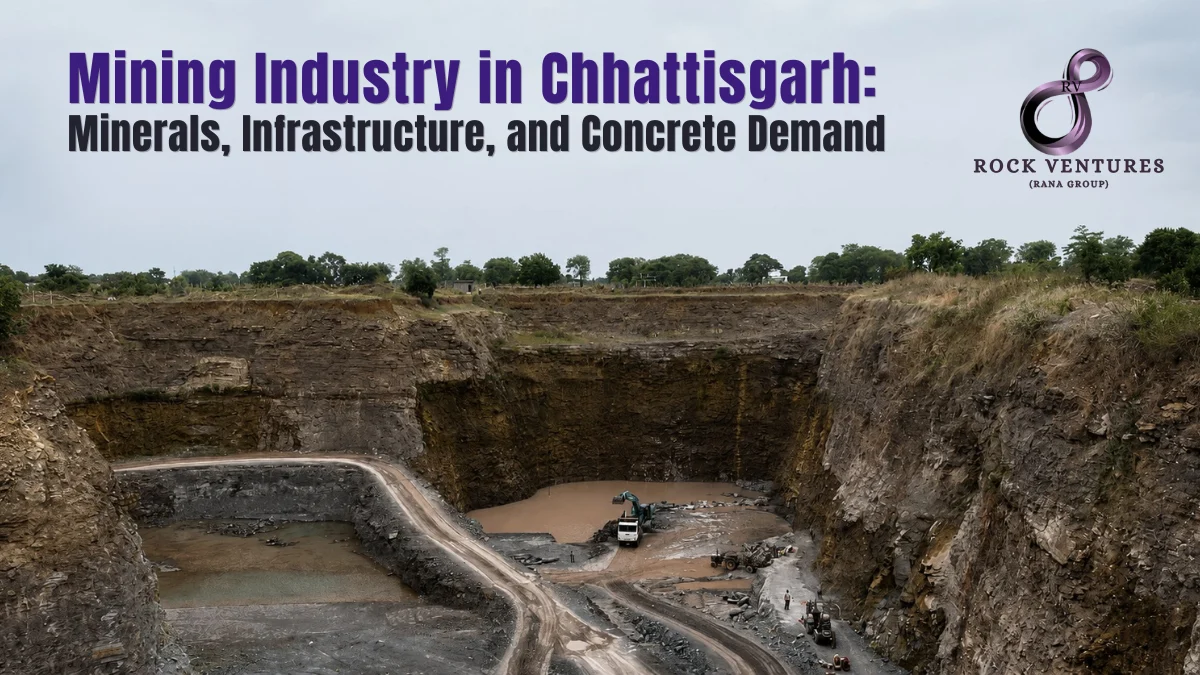
Chhattisgarh is one of India’s most important mining states, known for its strong mineral base, industrial infrastructure, and growing demand for construction materials. According to the Government of Chhattisgarh, 28 types of minerals have been identified in the state, including diamond, iron ore, coal, limestone, dolomite, tin ore, bauxite, and gold. The mining industry in Chhattisgarh is not only important for mineral extraction but also for steel plants, power generation, cement manufacturing, road construction, railway logistics, industrial parks, and concrete-based infrastructure. This makes the state a key market for mining contractors, cement companies, ready-mix concrete suppliers, equipment providers, infrastructure developers, and industrial construction businesses.
Why Chhattisgarh Is Important for India’s Mining Sector
Chhattisgarh has a natural advantage because of its rich mineral reserves and central location. The state borders seven states and has strong road, rail, and air connectivity, making it suitable for mineral movement, industrial development, and logistics-based investment. The Invest Chhattisgarh portal also highlights the state’s role as a leading producer of iron, steel, cement, and aluminium.
Mining in Chhattisgarh supports several major industries. Coal supports thermal power generation, iron ore supports steel production, limestone supports cement manufacturing, and bauxite supports aluminium production. These industries create a continuous need for transport networks, storage yards, processing units, industrial buildings, bridges, roads, and heavy-duty concrete structures.
Major Minerals Found in Chhattisgarh
The minerals in Chhattisgarh are widely distributed across the state. Important mineral-bearing districts include Korba, Raigarh, Dantewada, Bastar, Kanker, Bilaspur, Baloda Bazar, Surguja, Jashpur, and Durg.
Coal in Chhattisgarh
Coal mining is one of the strongest pillars of the Chhattisgarh mining industry. Coal is mainly used for power generation, sponge iron units, cement plants, and other energy-intensive industries. Areas such as Korba and Raigarh are well known for coal mining and power-related industrial activity.
Coal mining also creates heavy infrastructure demand. Mining roads, weighbridges, worker facilities, loading points, drainage systems, boundary walls, and railway sidings require durable concrete solutions that can handle heavy vehicles and continuous industrial use.
Iron Ore in Chhattisgarh
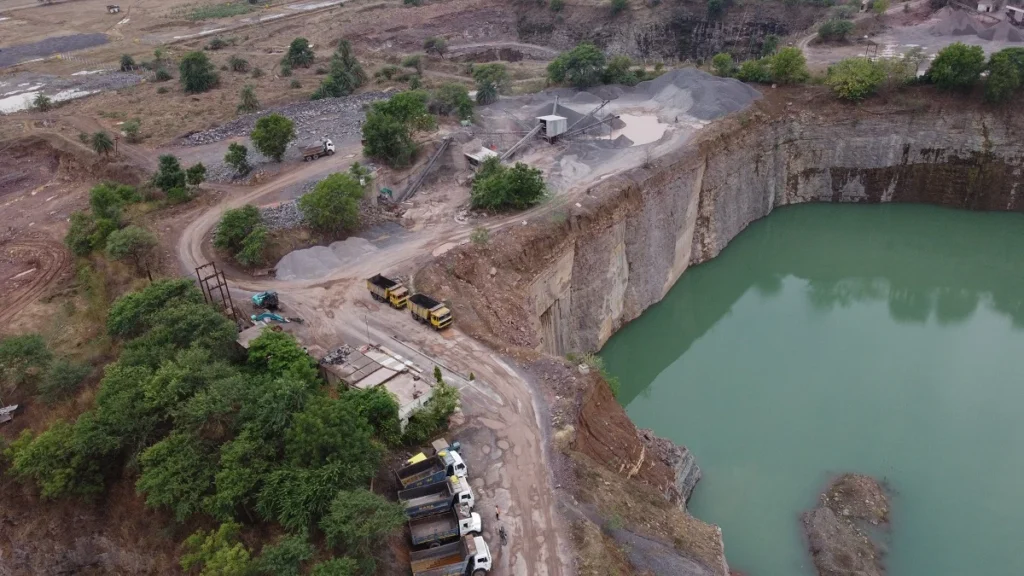
Iron ore is another major mineral in Chhattisgarh. It supports steel plants and downstream industries across the state and nearby markets. The Ministry of Mines states that Chhattisgarh accounts for a significant share of India’s iron ore hematite resources, along with important shares of bauxite, limestone, tin ore, and diamond resources.
Iron ore mining drives demand for crushers, conveyors, stockyards, processing plants, approach roads, retaining walls, and rail-loading infrastructure. These facilities require high-strength concrete, reinforced concrete foundations, and industrial flooring.
Limestone in Chhattisgarh
Limestone is essential for cement production, and Chhattisgarh’s limestone reserves make the state an important cement manufacturing hub. Cement plants require large-scale mining support, clinker units, silos, warehouses, roads, and power infrastructure.
Because limestone is directly linked to the cement industry, it also has a close relationship with concrete demand. As cement production grows, the demand for ready-mix concrete, precast elements, industrial flooring, and infrastructure concrete also increases.
Bauxite, Dolomite, Tin Ore, and Other Minerals
Chhattisgarh is also known for bauxite, dolomite, tin ore, diamond, and gold-bearing mineral potential. Bauxite supports aluminium production, dolomite is used in steel and refractory industries, and tin ore gives Chhattisgarh a special position in India’s mineral map. The state government identifies tin ore, bauxite, dolomite, diamond, gold, coal, limestone, and iron ore among the major minerals found in Chhattisgarh.
Mining Infrastructure in Chhattisgarh
Mining infrastructure in Chhattisgarh includes roads, railways, industrial areas, power supply, logistics parks, storage facilities, and mineral-processing zones. The state’s investor portal mentions robust connectivity through air, road, and rail transport, along with 70+ well-developed industrial areas, a multimodal logistics park at Nava Raipur, and sector-specific parks for metal, engineering, electronics, food processing, textiles, pharma, and other industries.
This infrastructure is important because mining is not limited to extraction. Minerals must be transported from mines to processing units, power plants, cement factories, steel plants, ports, railway terminals, and end-use markets. Every stage of this chain requires strong civil construction and concrete-based development.
Road and Rail Connectivity
Road and rail connectivity are crucial for coal, iron ore, limestone, and bauxite transportation. Heavy mineral trucks need durable mine roads, concrete pavements, bridges, culverts, and loading zones. Rail connectivity helps move bulk minerals in large volumes, reducing transport time and improving supply chain efficiency.

Power and Industrial Support
Chhattisgarh has a strong power and industrial base. The state investor portal notes surplus power of more than 26,000 MW installed capacity, which strengthens industrial operations and energy-intensive sectors.
Reliable electricity is important for mining equipment, crushers, conveyors, beneficiation plants, cement units, steel plants, and industrial townships. As industrial power demand grows, related substations, control rooms, transmission foundations, and plant buildings also increase the need for concrete.
How Mining Creates Concrete Demand in Chhattisgarh
The mining industry is one of the biggest drivers of concrete demand in Chhattisgarh. Mines and mineral-based industries require long-lasting structures that can withstand heavy loads, dust, vibration, water exposure, and continuous movement of machinery.
Concrete Demand in Mine Development
Concrete is used in mine approach roads, internal haul roads, drainage channels, workshops, equipment foundations, retaining walls, weighbridges, security posts, parking areas, and administrative buildings. As mines expand, these concrete requirements also increase.
Concrete Demand in Mineral Processing
Processing units need crusher foundations, conveyor supports, stockyard flooring, silos, retaining structures, water tanks, and machine bases. These are not normal construction requirements; they need high-grade, industrial concrete with strong load-bearing capacity.
Concrete Demand in Cement and Steel Plants
Cement plants and steel plants are among the largest users of concrete during construction and expansion. They need massive foundations, clinker storage, raw material handling systems, chimneys, silos, cooling structures, warehouses, and heavy-duty floors.
Concrete Demand in Transport and Logistics
Mining logistics also create concrete demand. Railway sidings, truck terminals, loading platforms, culverts, bridges, fuel stations, and logistics parks all need concrete. As Chhattisgarh improves industrial connectivity, concrete demand is expected to remain strong in mining districts and industrial corridors.
Key Opportunities for Construction and Concrete Companies
The mining industry in Chhattisgarh creates opportunities for several construction-related businesses. Ready-mix concrete suppliers, cement dealers, aggregate suppliers, civil contractors, road contractors, precast manufacturers, waterproofing companies, and industrial flooring providers can benefit from mining-led infrastructure growth.
Ready-Mix Concrete Demand
Ready-mix concrete is useful for mining projects because it provides consistent quality, faster construction, and better strength control. Mines and industrial units often need large concrete volumes in remote or semi-remote locations, making batching plants and mobile concrete solutions valuable.
Precast Concrete Products
Precast drains, boundary walls, culverts, cable trenches, compound walls, and concrete blocks can reduce construction time in mining zones. Precast products are also useful where fast installation and repeatable quality are required.
Industrial Flooring and Heavy-Duty Concrete
Mining and mineral-processing sites need strong floors for workshops, warehouses, truck movement, and machinery operations. Heavy-duty industrial flooring is therefore a major opportunity in coal, iron ore, limestone, and cement-based industrial areas.
Environmental and Compliance Considerations
Mining growth also brings environmental and compliance responsibilities. Mining companies must focus on dust control, water management, mine reclamation, safe waste handling, green belts, and responsible land use. Concrete infrastructure can support environmental management through settling tanks, drainage systems, water treatment units, retaining walls, and stormwater control structures.
Sustainable mining infrastructure should balance mineral production with long-term environmental protection. This is especially important in forest-rich and tribal regions of Chhattisgarh, where responsible development is necessary for both industry and local communities.
Future Outlook of the Mining Industry in Chhattisgarh
The future of the mining industry in Chhattisgarh looks closely connected to infrastructure, industrial expansion, and mineral-based manufacturing. The state’s strong mineral base, central location, industrial areas, power availability, and logistics improvements give it a competitive advantage.
As coal, iron ore, limestone, bauxite, and other minerals continue to support power, steel, cement, and aluminium industries, the demand for concrete is likely to remain strong. Mining roads, railway sidings, industrial parks, processing plants, storage yards, townships, and environmental infrastructure will continue to create long-term opportunities for concrete and construction companies.
Final Thoughts
Chhattisgarh is more than a mineral-rich state. It is a major industrial growth region where mining, infrastructure, cement, steel, power, logistics, and concrete demand are connected. Businesses that understand this connection can find strong opportunities in mining construction, industrial concrete, road infrastructure, and mineral-based industrial development.
Summary Line
Chhattisgarh’s mineral wealth, industrial infrastructure, and cement-linked economy make it one of India’s strongest markets for mining-led concrete demand.
FAQs
What are the major minerals found in Chhattisgarh?
The major minerals found in Chhattisgarh include coal, iron ore, limestone, bauxite, dolomite, tin ore, diamond, and gold. The Government of Chhattisgarh states that 28 types of minerals have been identified in the state.
Why is Chhattisgarh important for the mining industry?
Chhattisgarh is important because it has rich mineral resources, strong industrial connectivity, power availability, and major industries such as steel, cement, aluminium, and power generation. These sectors depend heavily on minerals and mining infrastructure.
How does mining increase concrete demand in Chhattisgarh?
Mining increases concrete demand through mine roads, equipment foundations, processing plants, railway sidings, drainage systems, industrial flooring, warehouses, bridges, and worker facilities.
Which industries depend on mining in Chhattisgarh?
Steel, cement, aluminium, power generation, construction, logistics, and infrastructure sectors depend heavily on mining in Chhattisgarh.
Is limestone important for concrete demand in Chhattisgarh?
Yes. Limestone is the key raw material for cement production, and cement is the main binding material used in concrete. Therefore, limestone mining directly supports cement manufacturing and indirectly supports concrete demand.
What is the future of mining infrastructure in Chhattisgarh?
The future looks strong because Chhattisgarh has mineral reserves, industrial areas, logistics support, road and rail connectivity, and a growing base of mineral-linked industries. These factors are expected to support continued demand for mining infrastructure and concrete construction.
Read More Blogs