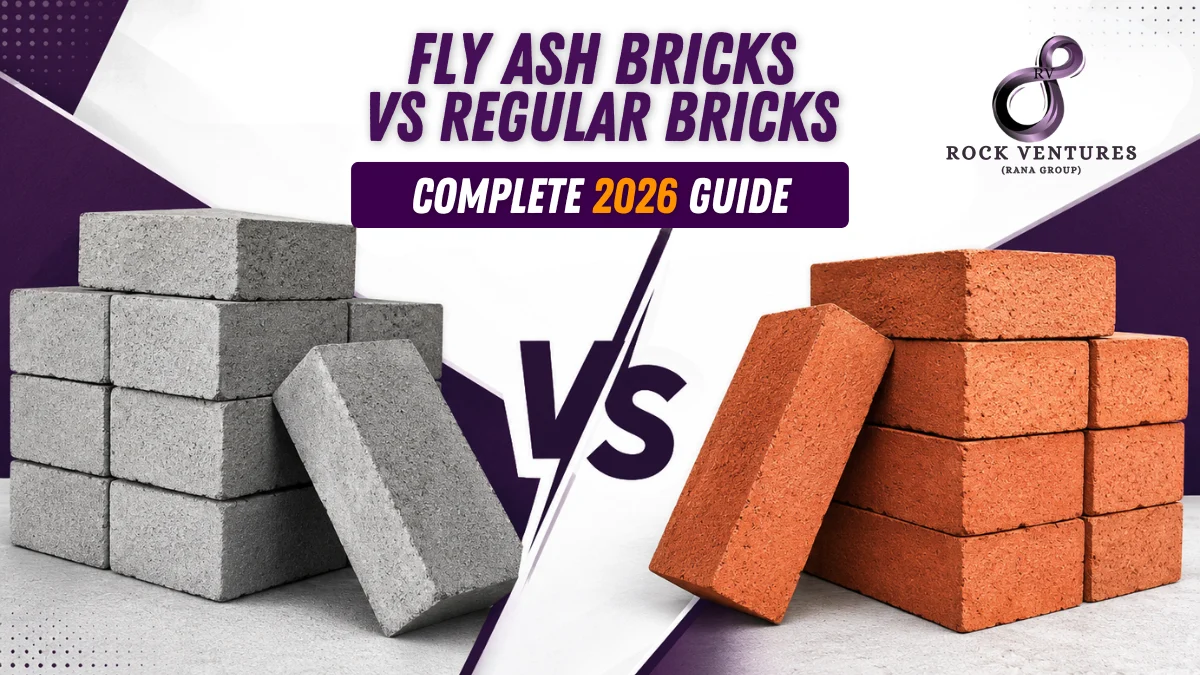
In the world of construction, choosing the right bricks can make or break your project — literally and financially. In 2026, with rising demand for sustainability and cost‑effective solutions, builders are comparing Fly Ash Bricks vs Regular Bricks more closely than ever before.
This complete guide will walk you through everything you need to know: what these bricks are, how they’re made, why they matter in modern construction, and how they stack up against each other across multiple parameters like strength, cost, durability, environmental impact and more.
What Are Fly Ash Bricks?
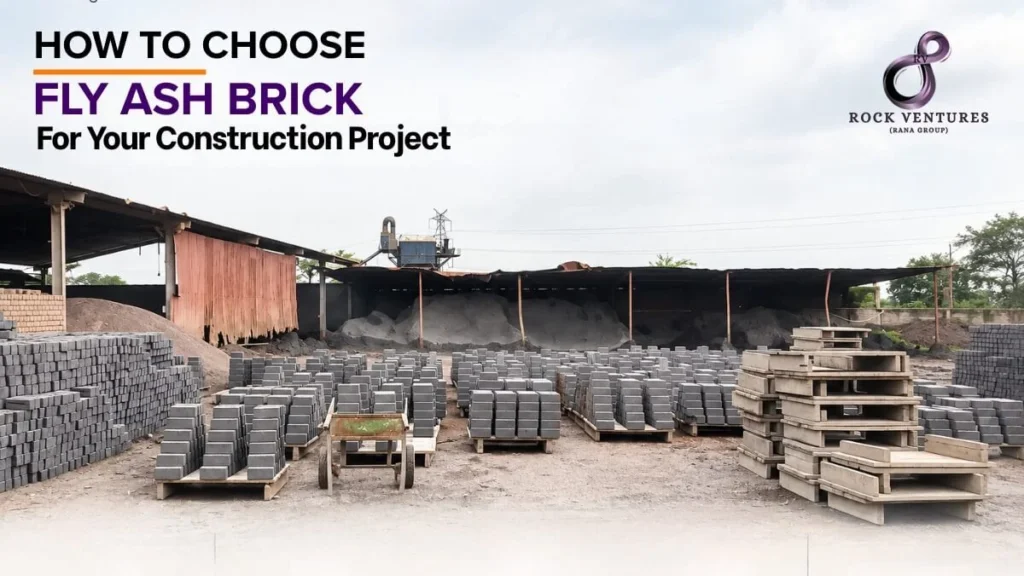
Fly ash bricks are modern masonry units made from a mix of fly ash — a by‑product of thermal power plants — along with cement, sand (or stone dust), and gypsum. These bricks are hydraulically pressed and water‑cured instead of being fired in a kiln.
This means two major benefits at the outset:
- They reduce environmental damage from traditional brick firing.
- They utilize industrial waste instead of fertile topsoil.
They are governed by Indian standard specifications such as IS 12894, ensuring structural reliability in construction.
What Are Regular Bricks (Clay / Red Bricks)?
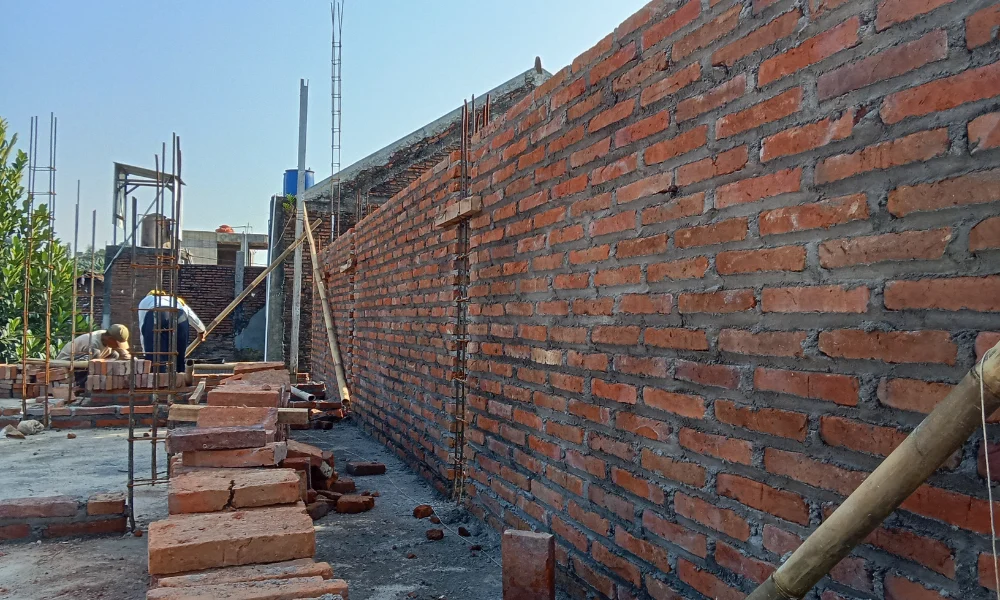
Regular bricks — often called clay bricks or red bricks — are the traditional building blocks made from natural clay soil. The clay is molded and then fired in kilns at high temperatures, giving them that classic reddish‑brown look and long‑standing use in homes and buildings.
Although they have been used for centuries and are widely available, they come with environmental and performance drawbacks in modern scenarios, especially compared to sustainable alternatives like fly ash bricks.
How Are Fly Ash Bricks and Regular Bricks Made?
Fly Ash Bricks Manufacturing Process
Unlike regular bricks, fly ash bricks don’t require firing. The general process includes:
- Mixing fly ash with cement/lime, sand, and gypsum.
- Using a hydraulic press to shape the bricks.
- Water curing them for a specified duration to achieve strength.
This saves energy and dramatically cuts emissions.
Regular Bricks Production
Regular bricks require:
- Mining of fertile topsoil (clay).
- Molding the bricks by hand or machine.
- Firing in kilns at high temperatures using wood, coal, or gas.
This process releases significant CO₂ and destroys topsoil, leading to environmental issues.

Fly Ash Bricks vs Regular Bricks: Detailed Comparison
Here’s a deep dive into how these two brick types compare on key construction parameters:
1. Environmental Impact
Fly ash bricks are noted for their eco‑friendly nature because:
- They use industrial waste (fly ash) instead of fertile soil.
- There’s no kiln firing, which reduces CO₂ emissions and energy use.
Traditional red bricks rely on burning clay, which contributes significantly to air pollution and depletes topsoil.
If your project or company values sustainability or green building certifications — fly ash bricks clearly stand out.
2. Strength and Durability
Due to their compressed and cured nature, fly ash bricks often exhibit:
- Higher compressive strength than many clay bricks.
- More uniform quality because of machine production.
This makes them suitable not only for partition walls but also load‑bearing structures in residential and commercial buildings.
3. Water Absorption & Weather Resistance
Fly ash bricks typically have lower water absorption than clay bricks, which reduces issues like dampness and efflorescence (salt deposits on the surface).
Regular bricks can absorb more water due to higher porosity, potentially leading to weaker walls over time.
4. Weight and Handling
Fly ash bricks are generally lighter than red clay bricks due to their material composition.
This lighter weight:
- Reduces dead load on foundations.
- Makes handling easier.
- Can reduce overall transport cost.
5. Thermal & Sound Insulation
While both brick types provide decent insulation, fly ash bricks often deliver better thermal performance which helps in keeping interiors cooler in hot climates — a big advantage in India and tropical regions.
6. Cost Comparison
On a per‑brick basis, fly ash bricks may sometimes be slightly higher priced than low‑grade clay bricks. However:
- They save plaster and mortar due to uniform size.
- Reduce labor and water curing needs.
- Can lower total wall cost.
This often leads to lower overall construction costs despite a slightly higher unit cost.
Applications: Where Each Brick Fits Best
Best Uses of Fly Ash Bricks
- Residential homes & compound walls.
- Multi‑storey load‑bearing walls.
- Sound‑insulating walls.
- Government and institutional buildings.
For government construction standards and usage details, see the Ministry of Housing and Urban Affairs – Government of India guidelines on sustainable masonry materials:
https://www.mohua.gov.in/
Best Uses of Regular Bricks
- Traditional architectural walls.
- Areas where local clay brick supply is cheaper and abundant.
- Historic or aesthetic heritage structures.
Top Benefits of Using Fly Ash Bricks in 2026
✔ Eco‑Friendly and Sustainable — No topsoil removal, utilizes waste.
✔ Uniform Size for Easy Construction — Faster laying, less plaster.
✔ Higher Strength & Less Water Absorption — Long‑lasting walls.
✔ Cost‑Effective in the Long Run — Saves mortar, plaster, labour.
✔ Better Thermal Comfort for buildings in hotter regions.
Common Myths About Fly Ash Bricks (Answered)
Myth 1: Fly Ash Bricks Are Weak
Fact: When made to IS standards, they have high compressive strength and are suitable for load‑bearing walls.
Myth 2: Fly Ash Bricks Are Harmful to Health
Fact: Bricks manufactured in compliance with regulations are safe — fly ash is bound in cement matrices and does not leach harmful substances.
Myth 3: Red Bricks Outperform Fly Ash Bricks Always
Fact: While red bricks have a legacy reputation, modern fly ash bricks outperform them in many structural and environmental aspects.
FAQs – Frequently Asked Questions (2026)
1. Are fly ash bricks stronger than normal bricks?
Yes, properly manufactured fly ash bricks generally have higher compressive strength and uniform quality due to machine pressing and controlled curing.
2. Do fly ash bricks reduce construction cost?
While unit cost might be similar or slightly higher, total construction cost often reduces due to lower mortar, plaster, and labour requirements.
3. Can fly ash bricks be used for load‑bearing walls?
Yes, they are suitable for load‑bearing walls when manufactured to IS standards.
4. What standards govern fly ash bricks in India?
Fly ash bricks follow IS 12894 specifications which regulate size, strength, and quality.
5. Are fly ash bricks eco‑friendly?
Absolutely — they reduce topsoil mining, reuse industrial waste, and lower carbon emissions compared to traditional clay bricks.
Conclusion: Which Bricks Should You Use in 2026?
If you’re building for the future — sustainable, cost‑efficient, strong, and environmentally conscious — Fly Ash Bricks are the superior choice in most modern construction settings. They outperform regular clay bricks in strength, efficiency, and long‑term value.
That said, regular bricks still have their place in certain traditional and low‑budget applications. For construction projects seeking official compliance and materials standards in government tenders and public infrastructure, refer to the Ministry of Housing and Urban Affairs, Government of India guidelines.
Read More Blogs
If you want to explore more insights related to the Ready Mix Concrete Suppliers Near Bhilai, construction materials, and infrastructure solutions, check out these useful blogs:
- Complete Guide to Top Ready Mix Concrete Suppliers Near Bhillai
- Importance of Mining Services in Industrial Development
- Why Chhattisgarh Is a Top Mineral Producing State in India
- Benefits of Professional Stone Crushing and Material Supply Services
- How Modern Mining Solutions Are Transforming Infrastructure Projects