Introduction to Ready Mix Concrete in India
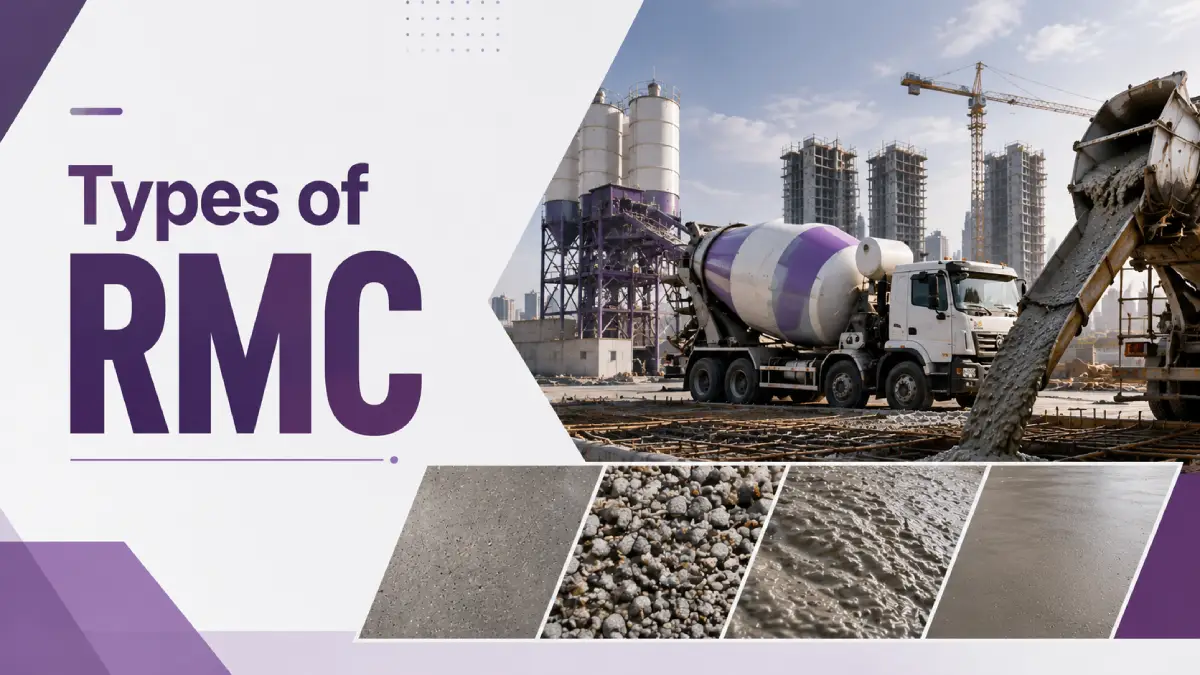
The Indian construction industry is growing rapidly with increasing demand for residential buildings, highways, metro projects, industrial structures, and smart cities. In this fast-moving sector, the types of ready mix concrete used in India play a major role in improving construction quality, speed, and durability.
Traditional site-mixed concrete often creates issues such as inconsistent quality, material wastage, and delayed project completion. Ready mix concrete, commonly known as RMC, solves these problems by offering factory-produced concrete with controlled quality standards.
In this guide, you will learn about the major ready mix concrete types used across India, their features, applications, benefits, and how to choose the right option for your project.
What is Ready Mix Concrete?
Ready mix concrete is concrete manufactured in a batching plant according to a specific mix design. It is then delivered to construction sites using transit mixer trucks.
The mixture usually contains:
- Cement
- Sand
- Aggregates
- Water
- Chemical admixtures
Since the entire process is controlled in a plant environment, ready mix concrete provides better consistency and strength compared to manually mixed concrete.
Why Ready Mix Concrete is Popular in India
India’s construction sector requires faster project execution with minimal errors. RMC helps builders achieve these goals efficiently.
Major reasons for its popularity include:
- Faster construction speed
- Better concrete quality
- Reduced labour dependency
- Less material wastage
- Improved durability
- Cleaner construction sites
- Better strength consistency
Cities like Delhi, Mumbai, Bengaluru, Hyderabad, Pune, and Chennai heavily depend on ready mix concrete for infrastructure and high-rise projects.
Types of Ready Mix Concrete Used in India
The different types of ready mix concrete used in India are classified based on mixing methods and performance characteristics.
Classification Based on Mixing Method
- Transit Mixed Concrete
- Central Mixed Concrete
- Shrink Mixed Concrete
Classification Based on Performance
- High Strength Concrete
- Self Compacting Concrete
- Fibre Reinforced Concrete
- Lightweight Concrete
- Decorative Concrete
- Pumpable Concrete
- Rapid Setting Concrete
Each type is designed for specific construction requirements.
Transit Mixed Ready Mix Concrete
Transit mixed concrete is one of the most commonly used RMC types in India.
In this method, ingredients are loaded into the mixer truck at the batching plant, and mixing happens during transportation.
Features of Transit Mixed Concrete
- Mixing occurs inside the truck drum
- Suitable for long-distance transportation
- Reduces initial setting issues
- Flexible for urban construction projects
Best Uses in India
Transit mixed concrete is widely used in:
- Residential buildings
- Commercial complexes
- Road construction
- Small infrastructure projects
This method is especially useful in crowded Indian cities where traffic delays are common.
Central Mixed Ready Mix Concrete
Central mixed concrete is fully mixed at the batching plant before transportation.
This type offers excellent consistency and high-quality control.
Advantages of Central Mixed Concrete
- Better uniformity
- Faster placement at site
- Reduced mixing time on location
- Superior strength consistency
Suitable Projects
Central mixed concrete is ideal for:
- Metro rail projects
- Airports
- Bridges
- Large commercial buildings
Large infrastructure companies in India often prefer this type due to strict quality standards.
Shrink Mixed Ready Mix Concrete
Shrink mixed concrete combines both plant mixing and truck mixing methods.
Part of the mixing occurs at the batching plant, while the remaining process continues during transportation.
Benefits include:
- Increased truck capacity
- Better mixing flexibility
- Reduced transportation time
- Improved workability
This type is suitable for medium and large construction projects.
High Strength Ready Mix Concrete
High strength concrete is specially designed to achieve greater compressive strength than conventional concrete.
It is widely used in India’s modern infrastructure projects.
Benefits of High Strength Concrete
- Higher load-bearing capacity
- Better durability
- Longer structural life
- Reduced maintenance costs
Indian Infrastructure Usage
High strength concrete is commonly used in:
- High-rise buildings
- Flyovers
- Industrial plants
- Dams
- Large bridges
With rapid urbanisation in India, demand for high strength concrete continues to increase.
Self Compacting Concrete
Self compacting concrete flows easily without the need for mechanical vibration.
It is highly effective in complex structures with dense reinforcement.
How Self Compacting Concrete Works
This concrete contains special admixtures that improve flowability and stability.
It spreads evenly under its own weight while maintaining strength.
Key Advantages
- Faster placement
- Reduced labour requirement
- Better surface finish
- Lower noise pollution
- Improved durability
Indian metro rail and commercial projects frequently use self compacting concrete.
Fibre Reinforced Ready Mix Concrete
Fibre reinforced concrete contains fibres such as steel, glass, or synthetic materials.
These fibres improve the structural performance of concrete.
Advantages include:
- Increased crack resistance
- Improved impact strength
- Better durability
- Enhanced tensile strength
Common Indian applications include:
- Industrial flooring
- Warehouses
- Pavements
- Tunnel linings
Lightweight Ready Mix Concrete
Lightweight concrete uses lightweight aggregates instead of conventional aggregates.
This reduces the overall dead load of the structure.
Benefits include:
- Reduced structural weight
- Better thermal insulation
- Improved earthquake resistance
- Lower transportation cost
This type is becoming popular in modern residential and commercial buildings in India.
Decorative Ready Mix Concrete
Decorative concrete focuses on aesthetics along with structural performance.
It is used to improve the visual appeal of surfaces.
Popular decorative finishes include:
- Coloured concrete
- Stamped concrete
- Polished concrete
- Exposed aggregate finishes
Indian architects often use decorative concrete in luxury homes, malls, and commercial spaces.
Pumpable Ready Mix Concrete
Pumpable concrete is specially designed for easy pumping through pipelines.
This type is essential for high-rise construction projects.
Benefits include:
- Faster concrete placement
- Reduced manual handling
- Better accessibility
- Lower labour costs
Pumpable concrete is heavily used in metro cities where vertical construction is increasing rapidly.
Rapid Setting Ready Mix Concrete
Rapid setting concrete gains strength quickly after placement.
It is useful for projects that require urgent completion.
Applications include:
- Highway repairs
- Airport runways
- Railway projects
- Emergency repairs
This concrete helps reduce downtime in busy urban areas.
How to Choose the Right Ready Mix Concrete
Selecting the correct concrete type is important for long-term structural performance.
Factors to Consider Before Choosing
Consider the following:
- Project type
- Structural load requirements
- Weather conditions
- Construction timeline
- Budget
- Transportation distance
- Durability needs
Importance of Supplier Quality
Always choose an experienced ready mix concrete supplier with:
- Modern batching plants
- Quality testing facilities
- Timely delivery systems
- IS standard compliance
Reliable suppliers ensure better construction quality and reduced project risks.
Benefits of Using Ready Mix Concrete in India
Ready mix concrete provides several advantages for Indian construction companies and builders.
Cost Efficiency
Although the initial price may appear higher, RMC reduces overall construction costs by minimising:
- Material wastage
- Labour expenses
- Rework costs
- Construction delays
Better Construction Speed
RMC significantly improves project speed because:
- Concrete arrives ready to use
- Mixing time is eliminated
- Placement becomes faster
- Labour productivity improves
This is especially valuable for large infrastructure projects.
Common Applications of Ready Mix Concrete
Ready mix concrete is used across almost every construction segment in India.
Residential Projects
Applications include:
- Villas
- Apartments
- Housing societies
- Foundations
- Driveways
Commercial and Infrastructure Projects
Common uses include:
- Shopping malls
- IT parks
- Highways
- Airports
- Bridges
- Metro rail systems
- Industrial factories
Government infrastructure investments are increasing RMC demand across India.
Challenges in Using Ready Mix Concrete
Despite its benefits, ready mix concrete also faces certain challenges.
Common issues include:
- Traffic delays affecting delivery
- Limited working time
- Requirement for skilled handling
- Higher dependency on logistics
- Need for proper quality control
However, modern batching technology and GPS tracking systems are helping solve many of these problems.
Future of Ready Mix Concrete in India
The future of ready mix concrete in India looks highly promising.
Several factors are driving market growth:
- Rapid urbanisation
- Smart city projects
- Infrastructure expansion
- Growing high-rise construction
- Increased awareness about quality construction
Sustainable construction practices are also encouraging the use of eco-friendly concrete solutions.
Advanced technologies such as AI-based batching systems, automated quality monitoring, and green concrete production are expected to transform the Indian RMC industry further.
Conclusion
The different types of ready mix concrete used in India are transforming the modern construction industry by improving quality, speed, durability, and efficiency. From transit mixed concrete to self compacting and high strength concrete, every type serves a specific purpose based on project requirements.
As India continues to invest heavily in infrastructure and urban development, ready mix concrete will become even more important for builders, contractors, and developers. Choosing the right concrete type and supplier can significantly improve project performance and long-term structural safety.
If you are planning a residential, commercial, or infrastructure project, investing in high-quality ready mix concrete can help you achieve better results, faster completion, and long-lasting durability.
Frequently Asked Questions
Q: What is the most commonly used ready mix concrete in India?
A: Transit mixed concrete is the most commonly used ready mix concrete in India because it is suitable for urban construction projects and offers easy transportation from batching plants to sites.
Q: Which ready mix concrete is best for high-rise buildings?
A: Pumpable concrete and high strength concrete are ideal for high-rise buildings because they provide better strength, efficient placement, and improved durability for tall structures.
Q: Is ready mix concrete better than site-mixed concrete?
A: Yes, ready mix concrete offers better consistency, reduced material wastage, improved quality control, and faster construction compared to traditional site-mixed concrete methods.
Q: What are the benefits of self compacting concrete?
A: Self compacting concrete reduces labour requirements, improves surface finish, eliminates vibration needs, and ensures better compaction in heavily reinforced structures.
Q: Why is ready mix concrete becoming popular in India?
A: Ready mix concrete is becoming popular due to rapid infrastructure growth, labour shortages, faster project requirements, and increasing demand for quality construction materials.
Read More Blogs: Ready Mix Concrete vs Site Mix Concrete: Which Is Better for Construction? Discover the differences, benefits, cost efficiency, and why Ready Mix Concrete is becoming the preferred choice for modern construction projects.